DISTRIBUTE YOUR MUSIC ✦ BUILD YOUR FAN BASE ✦ ENTER THE VERSUS ARENA ✦ EARN WITH MSC COIN ✦ GET YOUR AI MANAGER ✦ INVEST IN ARTISTS ✦ BOOK YOUR STREET TEAM ✦ GLOBAL MUSIC ECOSYSTEM ✦ DISTRIBUTE YOUR MUSIC ✦ BUILD YOUR FAN BASE ✦ ENTER THE VERSUS ARENA ✦ EARN WITH MSC COIN ✦ GET YOUR AI MANAGER ✦ INVEST IN ARTISTS ✦ BOOK YOUR STREET TEAM ✦ GLOBAL MUSIC ECOSYSTEM ✦ DISTRIBUTE YOUR MUSIC ✦ BUILD YOUR FAN BASE ✦ ENTER THE VERSUS ARENA ✦ EARN WITH MSC COIN ✦ GET YOUR AI MANAGER ✦ INVEST IN ARTISTS ✦ BOOK YOUR STREET TEAM ✦ GLOBAL MUSIC ECOSYSTEM ✦ DISTRIBUTE YOUR MUSIC ✦ BUILD YOUR FAN BASE ✦ ENTER THE VERSUS ARENA ✦ EARN WITH MSC COIN ✦ GET YOUR AI MANAGER ✦ INVEST IN ARTISTS ✦ BOOK YOUR STREET TEAM ✦ GLOBAL MUSIC ECOSYSTEM ✦

Ed Sheeran: Songs, Albums and His Remarkable Music Career

Ed Sheeran: Songs, Albums and His Remarkable Music Career
Share Post:

This overview of Ed Sheeran’s music career, major songs, albums, achievements, and journey to becoming a world‑recognized singer‑songwriter, shows how a guitar-led storyteller became one of modern pop’s most reliable hitmakers. His rise is not just a story of chart success; it is a story of emotional writing, smart collaborations, genre flexibility, and a rare ability to make huge venues feel intimate.

Ed Sheeran performing on stage with an acoustic guitar

How did Ed Sheeran become a global singer-songwriter?

Ed Sheeran became a global singer-songwriter by building a direct connection with listeners before, during, and after mainstream fame. His breakthrough came from songs that felt personal but easy to share: heartbreak, youth, family, devotion, grief, and celebration all appeared in plain-spoken language. The Recording Academy notes that his debut album + reached No. 5 on the Billboard 200, while “The A Team” reached No. 16 on the Hot 100 and earned him his first Grammy nomination. (grammy.com)

That early success mattered because it established the formula Sheeran would refine for years: simple melodic hooks, conversational lyrics, acoustic roots, and pop instincts. Instead of abandoning the singer-songwriter identity as his audience grew, he expanded it. He could write a wedding ballad, a club-ready single, a folk-pop memory piece, or a collaboration-heavy radio track without losing the sense that the song began with one voice and a guitar.

The albums trace a clear creative evolution

Sheeran’s albums work like chapters. Each one keeps part of his core style while adding a new layer: more confident production, broader collaborations, deeper personal writing, or bigger pop ambition.

  • + (Plus) introduced Sheeran’s blend of acoustic pop, folk influence, and intimate storytelling. Songs like “The A Team” and “Lego House” showed his gift for making specific stories feel universal.
  • x (Multiply) pushed him into a larger pop space. “Sing” brought a sharper, funkier edge, while “Thinking Out Loud” became one of his signature romantic ballads. Grammy.com identifies x as his first album to top the Billboard 200. (grammy.com)
  • ÷ (Divide) turned Sheeran into a stadium-scale pop force. The album balanced the rhythmic pull of “Shape of You,” the nostalgia of “Castle on the Hill,” the romance of “Perfect,” and the folk-pop charm of “Galway Girl.”
  • No.6 Collaborations Project leaned into his role as a pop connector, pairing him with artists across styles and audiences.
  • = (Equals) continued his mainstream pop run with songs like “Bad Habits” and “Shivers,” both built for big choruses and repeat listening.
  • – (Subtract) stripped the sound back and focused on grief, anxiety, and personal reckoning.
  • Autumn Variations kept that reflective mood while moving into a looser, seasonal singer-songwriter frame.
  • Play arrived in 2025 as his eighth full-length album, with Apple Music describing it as a pop revival that also explores global influences, including Bollywood-tinged, Persian-influenced, and Punjabi-inspired sounds. (music.apple.com)

Which Ed Sheeran songs define his career best?

ADVERTISEMENTMYSOUND SPONSORED ADS
🔥 MYSOUND GLOBAL SPOTLIGHT
Monetize your tracks, access AI tools, and earn MSC streaming rewards directly.
START FOR FREE

The songs that define Ed Sheeran best are the ones that show both sides of his appeal: emotionally direct ballads and polished pop anthems. “The A Team” introduced him as a serious storyteller; “Thinking Out Loud” confirmed his strength as a romantic songwriter; “Shape of You” proved he could dominate global pop; and “Bad Habits” showed he could refresh his sound without starting over.

Watch Ed Sheeran debut nostalgic new song ‘Old Phone’ on ‘Fallon’

A short career playlist might include:

  1. “The A Team” — a delicate early single that framed Sheeran as a writer of compassionate character studies.
  2. “Lego House” — a warm example of his acoustic-pop beginnings.
  3. “Sing” — a turning point that brought more rhythm and swagger into his catalog.
  4. “Thinking Out Loud” — a modern first-dance staple and one of his most recognized love songs.
  5. “Photograph” — a sentimental ballad built around memory, distance, and devotion.
  6. “Shape of You” — a sleek pop single with a minimal groove and massive crossover appeal.
  7. “Castle on the Hill” — a nostalgic anthem about growing up, friendship, and returning home.
  8. “Perfect” — a classic Sheeran ballad, later expanded through high-profile duet versions.
  9. “Bad Habits” — a darker, dance-pop reinvention from the = era.
  10. “Eyes Closed” — a vulnerable track tied to the emotional world of Subtract.

His achievements show unusual staying power

Sheeran’s achievements are impressive because they span songwriting respect, awards recognition, chart records, and live popularity. As of the Recording Academy’s current artist profile, he has 4 Grammy wins and 17 nominations, including wins for “Thinking Out Loud,” “Shape of You,” and ÷. (grammy.com)

His UK chart history is just as striking. The Official Charts Company reported that “Shape of You” and “Castle on the Hill” entered the UK singles chart at No. 1 and No. 2 in the same week, calling it a first for any artist. (officialcharts.com) It also reported that ÷ became the fastest-selling album by a male artist in UK chart history at the time, with 672,000 first-week chart sales. (officialcharts.com)

Awards outside the Grammys reinforce his status at home. The BRIT Awards recognized him early, including British Male Solo Artist and British Breakthrough Act in 2012, while later BRIT coverage highlighted his Global Success recognition and continued commercial reach. (officialcharts.com)

ADVERTISEMENTMYSOUND SPONSORED ADS
🔥 MYSOUND GLOBAL SPOTLIGHT
Monetize your tracks, access AI tools, and earn MSC streaming rewards directly.
START FOR FREE

The songwriting is simple on purpose

One reason Sheeran’s music travels so well is that it rarely hides behind complicated language. His best-known songs often start with everyday scenes: a photograph, a hometown road, a dance floor, a partner, a late-night mistake. That simplicity is not a lack of craft; it is the craft. He writes in a way that lets listeners quickly place their own lives inside the song.

He also understands contrast. A soft vocal can sit over a huge chorus. A folk melody can live inside a pop production. A personal lyric can become a stadium chant. This balance is why Ed Sheeran’s music career, major songs, albums, achievements, and journey to becoming a world-recognized singer-songwriter remains relevant across acoustic playlists, pop radio, weddings, arenas, and quiet headphone listening.

Ed Sheeran | Biography, Songs, Albums, Shape of You, Wife, & Facts ...

The lasting takeaway

Ed Sheeran’s career stands out because it connects scale with sincerity. He has the awards, chart records, major albums, and global songs, but the foundation is still songwriting that feels direct and human. From + to Play, his journey shows how a singer-songwriter can grow into a worldwide pop figure without completely leaving the acoustic roots that made people listen in the first place.

ADVERTISEMENTMYSOUND SPONSORED ADS
🔥 MYSOUND GLOBAL SPOTLIGHT
Monetize your tracks, access AI tools, and earn MSC streaming rewards directly.
START FOR FREE
Share Post:

Related Articles

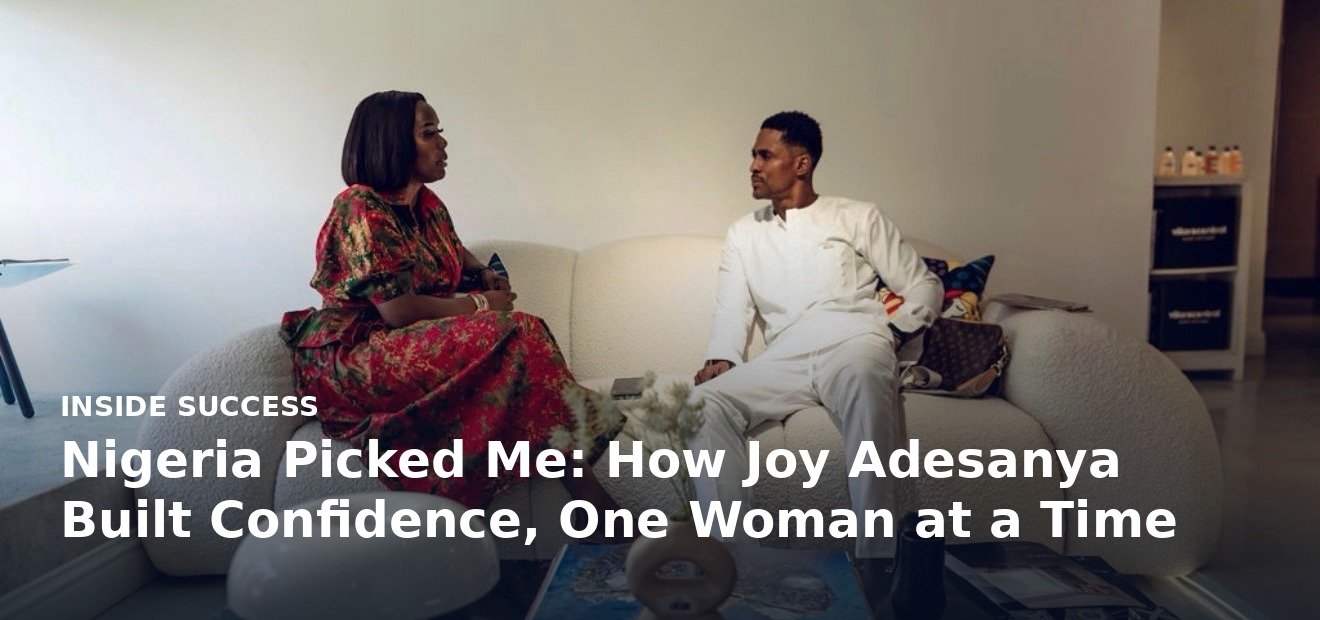
Nigeria Picked Me: How Joy Adesanya Built Confidence, One Woman at a Time

Nigeria Picked Me: How Joy Adesanya Built Confidence, One Woman at a Time

Joy Adesanya does not describe herself as a woman who simply runs businesses. She describes herself as a woman who serves — and who found her purpose in helping other women feel confident in their own skin, their own hair, and their own lives. As Group Managing Director of AJ Skylar, she leads a group whose brands include Sshhh Lingerie Boutique and The Braiding Vault, with locations across Nigeria and London. But the story behind those brands did not start with a business plan. It started with what she saw — and did not see — when she returned to Nigeria. It started with body image “My area of speciality is the beauty industry, hair to be precise,” Joy says. “But I started off with body image, because I felt that when I relocated back to Nigeria, there wasn’t a lot of positive body images being shown in women.” So she started with lingerie — not as a luxury for its own sake, but as a way to redefine sensuality. “In Nigeria, they never had nice lingerie stores,” she explains. “It was usually like a bend-down-select that you would go to in the marketplace. So there was nothing like a Victoria’s Secret or a Marks & Spencer.” She brought that experience into the market. And from there, the business grew in a direction that felt natural to her: hair. Confidence starts from the head — and underneath For Joy, hair is not just hair. It is where confidence begins. “I realised very quickly that a woman’s confidence really does come from her head,” she says. “How she carries herself, how she presents herself — everything starts from two things: her hair, and what she’s wearing underneath.” That is the thread that runs through everything she has built in Nigeria: the seen and the unseen, both treated with the same care. “I got into this because I love service,” she says. “I believe that my purpose is to serve. And I’m able to serve through various businesses by connecting with women from all over the world, understanding their pain, their pressure points, and then turning that into something beautiful.” The hardest parts were funding — and being heard Joy is honest about what doing business in Nigeria cost her, especially at the start. “The most difficult thing for me in business would be being in Nigeria,” she says. “It’s a very dog-eat-dog territory.” First, there was money — or the lack of access to it. “Number one, you don’t really have access to funding, so it makes it difficult for you to kick your business up,” she says. Then there was something harder to put a price on: being taken seriously as a woman. “Number two, because you’re a woman, you’re always second-guessed on everything,” she says. “If they don’t hear a man’s voice first, then it’s always a problem.” Those two things, she says, were her biggest challenges when she first started: having her voice heard, and having the money to really do what she needed to do. “I didn’t pick Nigeria. Nigeria picked me.” Ask Joy why she chose Nigeria, after coming from the UK, and her answer stops you in your tracks. “I didn’t pick Nigeria,” she says, smiling at how strange that sounds. “Nigeria picked me.” She has now been there for 14 years. Her love for the country began much earlier, on a first visit when she was just 16. “I instantly fell in love with the people, the environment,” she says. “It was very different from what I was seeing on the news in the UK — very fond of putting Africa as an impoverished country or continent. So when people see it from abroad, they always feel like Africa is poor and Africa needs help.” What she saw was different. “But when I came here, I saw opportunity, I saw resources, I saw wealth,” she says. “And I wanted to be a part of that. I wanted to be a part of giving back to my people and making a difference.” Fourteen years on, she is clear about where she stands: “To be honest, I don’t think I’m ever going back.” Her proudest moment went in the opposite direction Joy’s proudest business moment is not a store opening in Nigeria. It is a store opening in the UK — four years ago. “It was a proud moment for me because I took something that I built here in Nigeria back to the UK,” she says. “And usually it’s the other way around.” That reversal matters to her. So much of the story told about Africa is about things arriving from elsewhere. Joy’s story is about something built in Nigeria, strong enough to travel back the other way. Who inspires her Joy does not name a single hero. She names a pattern. “I draw inspiration from many people. I don’t have one particular person that inspires me,” she says. “Mel Robbins inspires me. Oprah Winfrey inspires me. Tara Durotoye inspires me. These are women that have built businesses from nothing, that motivate, that give back.” More broadly, she says, she draws inspiration from “anybody that is ambitious and driven and has been able to change their story and their narrative.” In other words: people who did not accept the story they were given — and wrote a new one. What she would tell her younger self At the end of the interview comes the simplest question, and the simplest answer. What would you tell your younger self? “Don’t rush,” Joy says. “Everything will come at the time that it’s supposed to come.” It is advice that fits the whole conversation: a business built patiently, a country chosen slowly, a confidence that was never rushed — just grown, one woman at a time.

Your Phone Won’t Even Be Allowed in Your Bag

Your Phone Won’t Even Be Allowed in Your Bag

Your phone doesn’t just have to stay out of sight any more — from September 2027 it can’t be in your bag or your pocket at all during the school day. Here’s what’s changing, and what it means for you. 1. What just happened The Department for Education has updated its guidance on phones in schools. From September 2027, the rules go further than “no see, no hear” — the policy some schools use now, where your phone can stay in your bag as long as nobody sees or hears it. Under the new guidance, that won’t be enough: schools must have whole-school plans that keep phones out of use and out of reach during the school day. Education Secretary Lucy Powell put it plainly: “School is for learning and friendship, not scrolling.” 2. What’s already in place This isn’t the first step. Since 29 June 2026, schools in England have had a legal duty under the Children’s Wellbeing and Schools Act 2026 to follow the government’s guidance on phones, and since September 2026 the guidance has said schools should be phone-free by default — no phones in lessons, between lessons, at break or at lunch. Today’s change tightens it further: from September 2027, “not seen, not heard” is no longer enough. 3. What happens to your phone Each school decides how to do it. Some collect phones at the start of the day. Some use sealed pouches or secure lockers. Some have banned phones from the site altogether. If your parents need to reach you during the day, they go through the school office. Teachers aren’t exempt either — they can’t use personal phones in front of pupils for personal reasons during school hours. Head teachers’ unions have said schools will struggle to put the stricter rules in place without more funding from the government. 4. Does it actually work? The evidence is mixed, and it’s worth knowing both sides. The biggest English study so far — SMART Schools, run by the University of Birmingham and published in The Lancet Regional Health in February 2025 — followed 1,227 pupils aged 12 to 15 in 30 secondary schools. It found no difference in pupils’ mental wellbeing between schools that restrict phones and schools that don’t, partly because pupils just used their phones more after school. On exam results, studies suggest well-enforced bans can modestly help attainment, especially for lower-achieving pupils. A ban cuts distraction in lessons. On the current evidence, it’s not a cure for everything linked to phones and social media. 5. It’s not the same everywhere in the UK Education is devolved, so the new rules are for England. In Scotland, the government has said it will bring in a law to restrict personal phone use in schools and has consulted on it. In Wales, the Senedd recently voted against a national statutory ban, so schools there decide for themselves. Worldwide, UNESCO says 114 education systems — 58% of the countries it surveyed — now have national bans on phones in schools. 6. Don’t mix it up with the social media ban The school phone rules are separate from the UK’s planned ban on social media for under-16s, which is due to come in in March. 7. What to do now Check your own school’s policy — ask what happens to phones from September 2027, and whether that’s lockers, pouches or collection at the gate. If you use your phone for travel, homework or keeping in touch with family after school, work out with your parents how that changes. And if you disagree with your school’s approach, that’s what student voice and parent governors are for — say so, plainly. Closing question for readers: Do you think banning phones from bags and pockets will help you focus — or is it a step too far? Tell us what you think in the comments. Sources: DfE, Mobile Phones in Schools — statutory guidance (29 June 2026); BBC News, 10 Nov 2026; SMART Schools study, The Lancet Regional Health – Europe (Feb 2025); UNESCO Global Education Monitoring Report (Mar 2026).

Say What You Pay: The New Law That Forces Job Adverts to Show the Salary

Say What You Pay: The New Law That Forces Job Adverts to Show the Salary

From now on, bosses will have to tell you what a job pays before you apply. Only 18% of employers do that today. In a market where 715,000 young people are out of work, that one change could save jobseekers hours — and stop the guessing game for good. The advert will have to say what it pays Prime Minister Andy Burnham announced on 6 November that the Government will make it a legal requirement for all employers to say what a job pays in the advert. The plan is called “say what you pay”, and the Government says it will bring forward the legislation as soon as possible. Burnham put it plainly: “Whether you’re a young person starting out or a parent trying to support your family, you should know what a job pays before spending your time and effort applying for it. That’s why we will make it a legal requirement for all employers to say what you pay.” In the meantime, he is calling on all businesses to start publishing pay on their job ads now, rather than waiting for the law to change. Most adverts hide the pay The reason the law is needed is in the numbers. Research from the Chartered Institute of Personnel and Development (CIPD) shows that only 41% of employers always publish salary ranges in their job ads — and just 18% always publish the specific salary. That means most of the time, you are applying blind. The words jobseekers know too well — “competitive salary”, “salary depending on experience”, or no pay mentioned at all — are about to become a thing of the past. The proposed requirement replaces that vagueness with a minimum standard: the pay, or at least the pay range, up front, before you spend your time and effort applying. And this is not a policy being pushed against business. The Cabinet Office launched a consultation into pay equality in the summer, and early analysis showed 94% of respondents backed greater transparency — including 93% of businesses. The consultation closed on 27 October. Employers, it turns out, largely agree the current system wastes everyone’s time. Why this hits young people hardest This lands the day after the Magazine reported that only 15% of UK bosses are hiring confidently — in a market where youth unemployment is 15.6% and 981,000 young people are outside work, education or training. This matters most to the people with the least experience to trade on — young jobseekers. The latest official figures show youth unemployment at 15.6% for 16- to 24-year-olds in June to August 2026, with 715,000 young people unemployed — 54,000 more than a year earlier. Vacancies have fallen to 691,000, the lowest outside the pandemic since 2014. And 981,000 young people — 13.0% of 16- to 24-year-olds — are not in education, employment or training. When there are fewer jobs and more people chasing them, every application costs time you cannot get back. Writing a tailored CV, preparing for an interview, travelling across town — all for a job that might pay less than you need to live on. Knowing the salary before you apply lets you filter out the jobs that do not pay enough and focus on the ones that do. It also stops the awkward dance at the end of the process, where a young applicant with no experience is expected to name a number first. The Government says the change will also help tackle pay gaps that disadvantage women, and it is part of a wider push on youth inactivity — the Milburn Review into young people and work is due to publish its final report in the coming weeks. Its interim findings put the cost of youth inactivity at £125 billion a year. What the law will not do yet This is an announcement, not a law in force. There is no implementation date yet, and the Government says further details — what exactly employers will have to publish, which employers it covers, and how it will be enforced — will be set out “in due course”. For now, employers face no new legal obligation. That is worth knowing, because it means the change will not happen overnight. But the direction is clear, and the UK is not alone: pay transparency rules have already come into effect across the European Union, requiring employers to tell jobseekers the starting salary or pay range in the advert ahead of an interview. The Autumn Budget on 28 October was already moving in the same direction for young people: a £3,000 Youth Jobs Grant for businesses hiring eligible young unemployed people, the Jobs Guarantee extended to 22- to 24-year-olds, and a £2,000 payment for smaller employers taking on young apprentices. The pay law is the next piece — making the jobs that do exist easier to judge. What you can actually do The law is coming, but you do not have to wait for it to job-hunt smarter. Five moves that help right now: Ask the pay before you apply. If an advert hides the salary, ask the recruiter or hiring manager what the range is before you invest hours in an application. You are allowed to ask. Check the going rate. Before you apply, look up what the role usually pays in your area, so you know whether the number — when you get it — is fair. Do not name a number first. If an employer pushes you to state your salary expectations early, give a researched range, not a single figure — and remember the law is moving in your favour. Use the Budget help. If you are 16 to 24 and out of work, ask about the Youth Jobs Grant and the Jobs Guarantee — employers get support to hire you, and that is leverage. Apply where the pay is already public. Employers who publish salaries now are telling you something about how they treat people. Prioritise them. The guessing game is ending. Until…

Only 15% of UK Bosses Are Hiring — and Young People Are Paying the Price

Only 15% of UK Bosses Are Hiring — and Young People Are Paying the Price

Hiring confidence has collapsed, apprenticeships are being cut and entry-level jobs are drying up — just as around a million young people sit outside work, education or training. The Budget raised pay, but who is actually hiring? The first rung of the ladder is disappearing If you are young and looking for your first proper job, the market is moving against you. That is the blunt message of the CBI/Pertemps Employment Trends Survey 2026, published on 13 October. Only 15% of businesses say they are hiring confidently, down from 24% in 2025. Labour costs are now the number one threat to the competitiveness of the UK jobs market, named by 73% of firms. And the squeeze is landing hardest on the people with the least experience. More than half of businesses (53%) say cost pressures mean they are offering fewer apprenticeships than they would like. Almost half (44%) say rising recruitment and onboarding costs are pushing them towards experienced hires, cutting entry-level opportunities for young people. Another 45% say they simply do not have the demand to justify creating entry-level roles at all. Rain Newton-Smith, chief executive of the CBI, put it plainly: “Higher employment costs and growing regulatory pressures are making firms more cautious about hiring and investment. That matters not just for businesses, but for living standards and particularly for young people trying to get their first foot on the career ladder.” A million young people locked out The survey lands against a bleak backdrop. Around one million 16- to 24-year-olds in the UK are now classified as not in employment, education or training. Retailers — traditionally one of the biggest employers of young people — warn that Budget-related costs are making it harder to take young staff on, with around £250 million in extra business rates and £2 billion in employment costs from wage increases. High street trouble is adding to the pressure. Poundland has filed a notice of intention to appoint administrators, putting around 12,000 jobs at risk. And even for those in work, pay is stalling: only 47% of firms expect to raise pay in line with or above inflation at their next review, compared with 70% in 2024. The Budget gave with one hand Chancellor John Healey’s Autumn Budget, delivered on 28 October, did bring help. The National Minimum Wage and National Living Wage both rise by 3.9% in April, at the start of the new tax year. The minimum wage for 18- to 20-year-olds currently stands at £10.85 an hour; the Living Wage for workers aged 21 and over is £12.71. Twenty million households will also receive a one-off £100 payment towards energy bills, and a temporary VAT cut has been extended until 1 July, cutting the annual price cap by £50. But the small print is less cheerful. The Office for Budget Responsibility says it expects no growth in real earnings next year, and it has cut its growth forecast for 2027 to 1%, down from 1.6%. When the survey asked firms about an estimated 3.7% rise in the Living Wage to £13.18, 39% said they would offset the cost by raising prices, 29% by reducing employment and 22% by cutting business investment. A pay rise is welcome. A pay rise in a market where nobody is hiring is a different story. Still living at home The squeeze shows up in how young people actually live. The latest official figures show 35% of men aged 20 to 34 were living at home with their parents last year, compared with 22% of women in the same age range. The Budget did offer one longer-term promise for first-time buyers: a new First Time Buyer ISA launching on 6 April 2029, replacing the Lifetime ISA for new savers, paying a 25% bonus on your final balance — up to £20,000 in total — on deposits of up to £4,000 a year. The penalty for using Lifetime ISA funds on a home worth more than £450,000 has been cut from 25% to 20% from 29 October, so savers now get back at least what they put in. The Bank of England’s rate rise to 4% is already pushing up borrowing costs. 2029 is a long way off for someone trying to move out next year. But if you are saving, the new account is worth knowing about — and the penalty cut helps anyone already holding a Lifetime ISA. What you can actually do The picture is tough, but it is not hopeless. Half of employers told the CBI that cutting the regulatory burden on apprenticeships would make the system work better — so apprenticeships are still on the agenda, and pressure is building to fix them. Big employers are still recruiting: PwC alone has taken on 1,300 graduates this year. Five moves that help right now: Chase apprenticeships, not just jobs. They are under pressure, but they still exist — and they pay you while you learn. Apply where experience matters less. Retail, hospitality and care have always been the first rung; they are also the sectors feeling the squeeze, so apply early and apply widely. Make your CV prove something. A short course, a volunteer shift, a side project — anything that shows a hiring manager you can be trusted with real work. Use the pay rise. When the new minimum wage rates land in April, check your payslip. If you are 18 to 20, your minimum is £10.85 an hour now and rises 3.9% in April; if you are 21 or over, it is £12.71. Save where the bonus is. If you are putting money aside for a first home, a Lifetime ISA still pays a 25% bonus — and the penalty for using it on a pricier home has just been cut. The jobs market is not closed. But the door is narrower than it was, and it is young people squeezing through it. The bottom line Firms are cautious, apprenticeships are shrinking and a million young people are outside work…

Ed Sheeran: Songs, Albums and His Remarkable Music Career | MySound