DISTRIBUTE YOUR MUSIC ✦ BUILD YOUR FAN BASE ✦ ENTER THE VERSUS ARENA ✦ EARN WITH MSC COIN ✦ GET YOUR AI MANAGER ✦ INVEST IN ARTISTS ✦ BOOK YOUR STREET TEAM ✦ GLOBAL MUSIC ECOSYSTEM ✦ DISTRIBUTE YOUR MUSIC ✦ BUILD YOUR FAN BASE ✦ ENTER THE VERSUS ARENA ✦ EARN WITH MSC COIN ✦ GET YOUR AI MANAGER ✦ INVEST IN ARTISTS ✦ BOOK YOUR STREET TEAM ✦ GLOBAL MUSIC ECOSYSTEM ✦ DISTRIBUTE YOUR MUSIC ✦ BUILD YOUR FAN BASE ✦ ENTER THE VERSUS ARENA ✦ EARN WITH MSC COIN ✦ GET YOUR AI MANAGER ✦ INVEST IN ARTISTS ✦ BOOK YOUR STREET TEAM ✦ GLOBAL MUSIC ECOSYSTEM ✦ DISTRIBUTE YOUR MUSIC ✦ BUILD YOUR FAN BASE ✦ ENTER THE VERSUS ARENA ✦ EARN WITH MSC COIN ✦ GET YOUR AI MANAGER ✦ INVEST IN ARTISTS ✦ BOOK YOUR STREET TEAM ✦ GLOBAL MUSIC ECOSYSTEM ✦

UK Jobs in the AI Era: Why Workers Need to Build New Skills

UK Jobs in the AI Era: Why Workers Need to Build New Skills
Share Post:

Imagine waking up one morning and discovering that the job you have spent 15 years mastering has not disappeared, but the skills that made you valuable in it have changed. Your employer still needs your experience, your judgement and your knowledge, but now expects you to work alongside artificial intelligence, interpret its output and deliver results faster than ever before.

That is the uncomfortable reality emerging across the UK labour market.
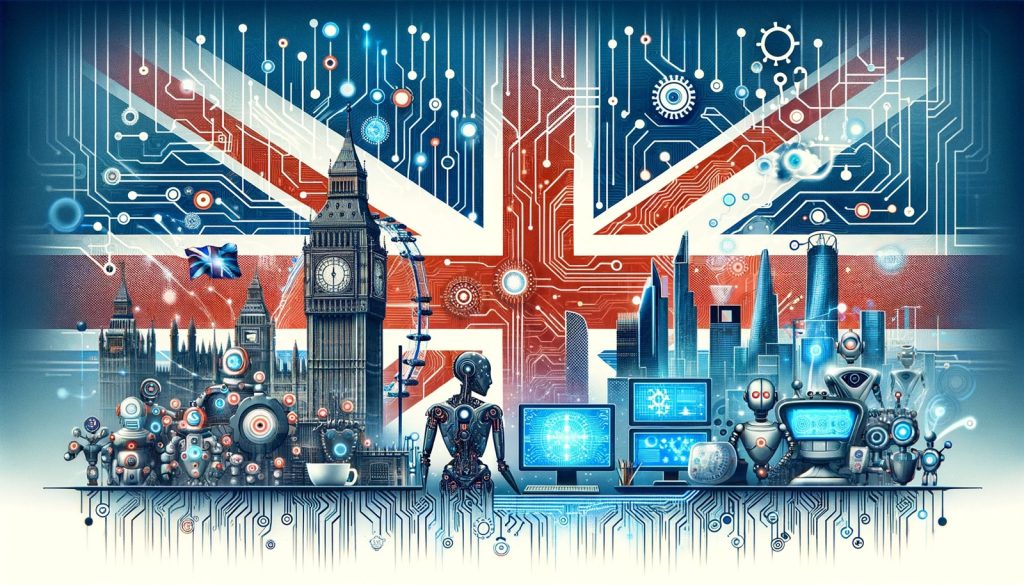
The Impacts of AI on Employment in the UK: Navigating the Future - BD ...

Artificial intelligence is no longer a futuristic technology sitting inside research laboratories. It is increasingly becoming part of recruitment, administration, finance, marketing, customer service, software development, healthcare and professional services. Indeed reported in August 2026 that 9.4% of UK job postings explicitly mentioned AI or related tools and programmes, a record level, while overall job postings were down 11% since the beginning of the year. The message is difficult to ignore: the UK is not simply losing jobs to technology; it is changing what it expects from the people who remain. And in this new environment, continuous reskilling may no longer be an advantage.

AI Is Changing the Job, Not Just the Job Market

For years, conversations about AI focused on one frightening question: Which jobs will disappear? But that question may now be too simplistic.

Artificial intelligence can automate certain tasks without eliminating an entire profession. A lawyer may still be needed even if AI can search thousands of documents in seconds. An accountant may remain essential even when software can process financial information automatically. A journalist can still investigate and write while AI assists with research and routine tasks. The job survives. But the job description changes. Skills England says AI is likely to automate or augment aspects of many occupations, with about 70% of UK workers estimated to be in occupations containing tasks that AI could potentially perform or enhance. This distinction is crucial.

The future worker may not compete against AI for the entire job. Instead, they may compete against another worker who knows how to use AI better. That creates a new kind of workplace competition.

The AI Skills Premium Is Already Emerging

There is already evidence that the labour market is beginning to reward AI capability. PwC‘s 2026 AI Jobs Barometer found that specialist AI job postings in the UK rose by 61%, increasing from 112,000 to about 180,000 in 2025. Overall vacancies, meanwhile, fell by 6.6%. The contrast is striking. While the wider employment market remains under pressure, demand for people with AI-related skills is moving in the opposite direction. And there is another incentive.

PwC found that UK workers with AI skills commanded an average 34.2% wage premium, up from 11% in 2024. That does not mean everyone who learns how to use ChatGPT will suddenly receive a 34% pay rise. It means something more significant is happening. Employers are beginning to place a measurable economic value on people who can combine professional expertise with AI capability.

You Do Not Have to Become a Computer Scientist

One of the biggest misconceptions about reskilling is that every worker must become a programmer. That is not the case. The majority of workers will probably not need to build sophisticated AI systems. They will need to understand how AI can be used within their own profession. Skills England’s AI foundation skills framework identifies basic capabilities including giving clear instructions to AI tools, using AI to support routine processes, adjusting tools to produce better results, and understanding the risks and ethical consequences of AI use. Consider a solicitor.

The future does not necessarily require every solicitor to become an AI engineer. But a solicitor who can use AI responsibly for document review, research or administrative work while applying legal judgement and verifying the output could become significantly more productive. The same principle applies to teachers, marketers, accountants, administrators, designers, managers and journalists. Reskilling is increasingly about extending your profession, not abandoning it.

Experience Alone May No Longer Be Enough

For experienced workers, this transformation carries both an opportunity and a warning. Experience remains extremely valuable because AI cannot automatically reproduce years of professional judgement, relationships and practical knowledge. But experience without adaptation can become vulnerable. Imagine two employees with ten years of experience. One continues working exactly as they did a decade ago. The other has learned how to use AI to analyse information, automate repetitive tasks, identify patterns and improve productivity. They may possess similar professional knowledge. But one can potentially deliver considerably more in the same amount of time. That is where the real competitive advantage lies.

Top Software Jobs Thriving and Declining in the AI Era: Future-Proof ...

ADVERTISEMENTMYSOUND SPONSORED ADS
🔥 MYSOUND GLOBAL SPOTLIGHT
Monetize your tracks, access AI tools, and earn MSC streaming rewards directly.
START FOR FREE

The future may therefore belong to the AI-augmented professional, someone whose human expertise becomes more powerful because technology is working alongside it.

Young Workers Face a Different Challenge

For younger people entering the labour market, the situation can be even more complicated. Entry-level jobs have traditionally allowed graduates and school leavers to learn through experience. They perform basic tasks, make mistakes, receive guidance and gradually develop professional judgement. But some of those basic tasks are increasingly suitable for automation.

A UK government analysis published in June 2026 found that hiring for 30 of 38 tracked entry-level occupations was declining. Information-processing roles were among the hardest hit, including accountant, graphic designer and software engineer positions. The analysis also found employers favouring experienced candidates who already possess operational skills. This creates a troubling paradox. Young workers need experience to become valuable, but AI may be reducing some of the traditional opportunities through which they gained that experience. That makes reskilling and practical learning even more important. A degree may open the door. But increasingly, employers want to know what you can actually do once you walk through it.

Human Skills Are Becoming More Valuable

There is an irony at the heart of the AI revolution. As machines become better at technical and repetitive tasks, some of the skills that become more valuable are deeply human.

  • Judgement.
  • Creativity.
  • Leadership.
  • Communication.
  • Empathy.
  • Problem-solving.
  • Collaboration.
  • Adaptability.

PwC’s UK research shows that demand is rising for human-intensive skills as AI reshapes jobs, while highly AI-exposed occupations are experiencing faster changes in the skills employers require. This means reskilling should not be interpreted as simply learning more technology. It should mean becoming more capable overall. A worker who knows how to operate an AI tool but cannot communicate effectively is limited. A manager who understands AI but cannot lead people is limited. A professional who accepts AI-generated information without questioning it is vulnerable. Technology literacy must therefore be combined with human judgement.

Continuous Learning Is Becoming the New Career Insurance

The old model of education was relatively straightforward:

  • Go to school.
  • Get a qualification.
  • Get a job.
  • Build experience.
  • Retire.

AI is making that model increasingly difficult to sustain. Technology changes too quickly. A qualification obtained ten years ago may remain valuable, but some of the practical skills surrounding it may have changed dramatically. That means learning can no longer be something that happens mainly at the beginning of adulthood. It has to continue throughout a career.

The UK’s AI Skills Boost programme reflects this changing reality. The government says the initiative aims to help 10 million UK workers develop AI skills by 2030, providing training designed to help people adapt to workplaces where AI tools are increasingly widespread. The significance goes beyond the number. It is an acknowledgement that the workforce itself must evolve if the economy is to benefit from AI.

Employers Also Have a Responsibility

It would be unfair to place the entire burden of reskilling on workers. Companies are introducing the technology. They therefore have a responsibility to help employees understand and use it. Government-backed research published in June 2026 found that organisations face significant challenges training their workforces to fully benefit from AI and recommended practical approaches for building inclusive, safe and sustainable AI training programmes. This matters because there is a danger of creating a new inequality: Workers in large companies may receive AI training, while workers in smaller organisations or lower-paid occupations are left behind.

That could produce an economy in which technological opportunity becomes concentrated among people who already have the best access to education, training and resources. Reskilling must therefore become accessible—not merely fashionable.

The Skills Gap Is Already Visible

Britain’s AI ambitions are also facing a shortage of people with the right skills. The government’s 2025 AI Labour Market Survey found that 97% of organisations surveyed identified at least one AI skills gap. Some 57% reported technical skills gaps, while 30% reported non-technical gaps. That tells an important story.

ADVERTISEMENTMYSOUND SPONSORED ADS
🔥 MYSOUND GLOBAL SPOTLIGHT
Monetize your tracks, access AI tools, and earn MSC streaming rewards directly.
START FOR FREE

10+ New Jobs in The Generative AI Era - Analytics Vidhya

The UK does not simply need more people who understand artificial intelligence. It needs people who can apply it effectively. The difference is enormous. Knowing what AI is does not necessarily make someone employable. Knowing how to use AI to solve a real business problem does. The Worker Who Refuses to Learn May Become the Vulnerable Worker This does not mean workers should panic every time a new AI tool appears. It means they should develop a habit of curiosity.

Ask:

  • What part of my job is likely to change?
  • Which tasks could AI perform?
  • Which tasks require human judgement?
  • What new skills will my industry need?
  • How can I become more productive rather than more replaceable?

Those questions could be more valuable than trying to predict exactly which jobs AI will eliminate. Because nobody can know precisely what the workplace will look like ten years from now. But we can already see the direction of travel.

Reskilling Is Not Just About Keeping a Job

There is another way to look at this transformation. Reskilling should not be treated simply as defensive behaviour , something workers do because they are afraid of redundancy. It can also be an opportunity for career growth. A person who learns AI could move into a more productive role. An administrator could become an automation specialist.

  • A marketer could become an AI-powered content strategist.
  • A teacher could develop new digital learning methods.
  • A financial professional could specialise in AI-supported analysis.
  • A manager could become better at decision-making through data.

The technology that threatens to make some tasks obsolete can also create entirely new forms of professional value.

The Future Will Reward Adaptability

The most important skill in the AI era may ultimately be neither coding nor prompt writing.  It may be adaptability. Because today’s valuable skill may not be tomorrow’s valuable skill. The worker who learns quickly has an advantage over the worker who relies entirely on yesterday’s expertise. This does not mean experience is becoming irrelevant. Quite the opposite. The strongest combination may be experience + AI literacy + human judgement. Someone who understands an industry deeply and knows how to use new technology within it can become exceptionally valuable. That is why continuous reskilling should not be viewed as an admission that previous knowledge has failed. It is a way of making previous knowledge remain relevant.

Britain Has a Choice

The UK is standing at an important economic crossroads. AI could increase productivity, create new industries and generate better-paid opportunities. But those benefits will not automatically reach everyone. Without sufficient training, some workers could be left behind. With little or no opportunities for younger people, the country could face an experience gap. Without responsible adoption, organisations could introduce technology faster than their people can safely use it. The opportunity is therefore enormous, but so is the responsibility. Britain does not simply need more AI. It needs more people who are equipped to work intelligently with AI.

The Real Future of Work Is Not Man Versus Machine

Perhaps the most important lesson is that the AI era should not be reduced to a battle between human beings and machines. The real competition may increasingly be between workers who adapt and workers who do not.

  • AI will continue to evolve.
  • New tools will appear.
  • Some tasks will disappear.
  • Others will emerge.
  • Entire professions will change shape.

And throughout it all, the most resilient workers are likely to be those who keep learning. The question facing the British workforce is therefore no longer simply, “Will AI take my job?” A better question is: “What skills will make me more valuable in a workplace where AI is already here?” That question shifts the conversation from fear to preparation. And preparation may be the greatest career advantage of all.

Call to Action

Whether you are a graduate entering the UK job market, an experienced professional protecting your career, an employer building a future-ready workforce or someone considering a complete career change, do not wait for AI to force you to learn. Start now. Identify the skills your industry is beginning to demand, learn how AI can strengthen your existing expertise, develop the human qualities technology cannot easily replace and make continuous learning part of your career strategy. The future of work will belong not necessarily to those who know everything, but to those willing to keep learning.


ADVERTISEMENTMYSOUND SPONSORED ADS
🔥 MYSOUND GLOBAL SPOTLIGHT
Monetize your tracks, access AI tools, and earn MSC streaming rewards directly.
START FOR FREE
Share Post:

Related Articles

Breast Cancer Awareness: Why Early Detection Matters and What You Need to Know

Breast Cancer Awareness: Why Early Detection Matters and What You Need to Know

Breast cancer awareness highlights early detection, warning signs, screening, risk factors and why unusual breast changes

Why Gillian Anderson’s West End Controversy Matters for Theatre Audiences

Why Gillian Anderson’s West End Controversy Matters for Theatre Audiences

Gillian Anderson’s West End controversy raises questions about celebrity, fan behaviour, theatre etiquette and the changing relationship

How AI Is Transforming the Music Industry: What Artists Need to Know

How AI Is Transforming the Music Industry: What Artists Need to Know

Imagine releasing a song today and discovering that within hours, an algorithm has already decided who is most likely to hear it, a streaming platform has determined where it should appear, data has identified the listeners most likely to become fans and somewhere else, an AI system has created a synthetic version of a song that sounds disturbingly like you. That is no longer science fiction. It is the music business of 2026. The latest move by Sony Music offers a striking glimpse into just how complicated this future is becoming. Sony has reportedly asked digital platforms to remove more than 260,000 AI-generated tracks impersonating its artists, almost twice the number it sought to remove just six months earlier. The tracks reportedly include AI imitations of major names such as Harry Styles, Adele, Britney Spears and Michael Jackson. But there is a bigger story behind that number. The music industry is not simply fighting AI. For artists in Britain and around the world, the question is becoming increasingly profound: in a music industry increasingly controlled by algorithms, data and artificial intelligence, what does it actually mean to have a career? Sony’s AI Battle Is Bigger Than Sony Sony’s latest fight illustrates the central contradiction facing the modern music industry. On one hand, AI can become a powerful creative tool. On the other, the same technology can imitate an artist’s voice, generate music at enormous scale and potentially flood streaming platforms with recordings that compete for listeners and royalties. Sony is therefore fighting one part of the AI revolution while positioning itself to participate in another. That is not necessarily contradictory. It may actually be the industry’s survival strategy. Sony Music joined the Alliance for Responsible Innovation in the Arts & Media in September, becoming the first major music company to join the coalition. The company said generative AI presents both opportunities and challenges and that it wants to help shape policies that protect creativity while supporting innovation. The message is becoming clear: AI is coming into music whether the industry likes it or not. The battle is increasingly about who controls it, how it is used and who gets paid. Streaming Already Changed the Artist’s Career Before AI arrived, streaming had already transformed what it meant to be a successful musician. The album shelf disappeared. The CD shop lost its dominance. The radio gatekeeper became less powerful. A teenager with a laptop could release a song and potentially reach listeners in Manchester, Miami, Mumbai or Melbourne. The UK provides a remarkable example. British recorded music revenue surpassed £1.5 billion for the first time in 2025, reaching £1.57 billion. Streaming revenue alone reached £1.07 billion, accounting for 67.7% of recorded music revenue. More strikingly, UK audio streaming passed 210 billion streams during 2025, with streaming representing 89.3% of music consumption under the BPI’s measurement. That means an artist’s career is increasingly built inside an ecosystem of streams, playlists, recommendations, algorithms and listener behaviour. The song is no longer simply released. It is processed by a machine. Data Is Becoming the New A&R. For decades, record companies relied heavily on human A&R executives to identify promising artists. They attended shows, listen to demos,  watch audiences and they followed trends. Today, data can reveal things humans might miss. Who is listening? Where are they located? How long do they listen? Which song do they replay? Where do listeners stop? Which cities are suddenly showing increased interest? Which demographic is discovering an artist? These questions can influence decisions about marketing, touring, playlist pitching and investment. This creates an extraordinary opportunity for independent British artists. An artist from Birmingham, Glasgow, Cardiff or Liverpool no longer necessarily needs a London executive to discover that people in Berlin or Los Angeles are responding to their music. The data can reveal the audience before the industry notices the artist. But there is a darker side. When artists begin creating music according to what the data says will perform, creativity itself can become dangerously predictable. Are Artists Becoming Products of the Algorithm? This is perhaps the question nobody wants to ask. If an algorithm discovers that songs under three minutes generate more completion rates, will artists start making shorter songs? Suppose that data shows that a particular sound is trending, will producers reproduce it? If certain lyrics generate more engagement, will songwriting become increasingly engineered? The danger is that artists may stop asking, “What do I want to say?” and start asking, “What will the algorithm reward?” That could produce an industry full of technically successful music but increasingly similar sounds. Yet the opposite may also be true. Data can tell an artist where the audience is without necessarily telling them what they must create. The smartest artists may therefore use data as a compass rather than a dictator. AI Could Become the Most Powerful Creative Assistant Yet It would be easy to discuss AI only as a threat. That would be a mistake. For an independent musician operating without the financial backing of a major label, AI could dramatically reduce the cost of making music. It can assist with brainstorming, arrangement, sound design, editing, translation, marketing, social media content and administrative tasks. Also, it could help an artist turn a rough musical idea into a working demo. Promotional material can be created. It could analyse audience behaviour. It could even help musicians identify potential markets for touring. The technology could therefore make it possible for one artist to operate like a small creative company. And this matters enormously in Britain, where emerging artists are competing in an increasingly crowded global marketplace. The UK recorded music export market reached a record £800.3 million in 2025, but growth slowed to just 0.8%, reflecting increasingly intense international competition. The world is producing more music. AI could make it produce considerably more. But More Music Does Not Mean More Attention This may become one of the defining problems of the next decade. Streaming has made music incredibly accessible, but accessibility has…

AI Jobs in the UK: Are Experienced Workers Becoming More Valuable?

AI Jobs in the UK: Are Experienced Workers Becoming More Valuable?

The British job market is beginning to reveal a paradox that could reshape careers for an entire generation: artificial intelligence is making some workers more productive, while simultaneously making it harder for others to get their first opportunity. At a time when AI was expected to create new pathways into employment, recent labour-market data suggests something more complicated is happening. Employers are increasingly looking for people who can combine professional experience with AI capability, creating what Indeed has described as a “two-speed” UK labour market. The question, therefore, is no longer simply whether AI will replace workers. A more uncomfortable question is emerging: will AI make experience more valuable and entry-level workers less valuable? The UK Job Market Is Splitting in Two The latest figures paint a striking picture. Indeed, UK labour-market data shows that overall vacancies remain under pressure, yet demand for jobs involving AI skills is moving in the opposite direction. By the end of June 2026, 9.4% of UK job postings explicitly mentioned AI or related tools and programmes, a record high. In data and analytics, the proportion was even more dramatic, with nearly half of postings mentioning AI. This creates an unusual situation. Companies are not necessarily hiring more people across the board. Instead, they appear to be becoming more selective about who they hire and what those workers can bring to the organisation. That distinction is crucial. A company may no longer need several employees to perform repetitive research, documentation or basic analysis when AI can assist with those tasks. But it may still desperately need an experienced professional who knows how to interpret the information, challenge an AI-generated answer, make a difficult decision and take responsibility for the outcome. The value is shifting from simply doing the task to knowing what to do with the result. Experienced Workers Have an Unexpected Advantage For years, technological disruption was often presented as a threat to older or more experienced workers. AI is challenging that assumption. Indeed, research found that software-development vacancies had recovered, with postings rising 14%, but much of the growth was concentrated in senior positions and roles directly connected to AI. IT and engineering were also among the areas where experience remained particularly valuable because AI could take over routine tasks while allowing experienced workers to concentrate on more complex responsibilities. That could fundamentally change the meaning of experience. An experienced accountant, for example, may use AI to analyse thousands of financial records faster than before. But the ability to recognise an unusual transaction, understand the commercial context and advise a client cannot necessarily be handed over to a machine. The same principle applies to lawyers, engineers, managers, doctors, marketers, journalists, financial professionals and countless others. AI may be able to accelerate the work, but experience helps determine whether the work is right. AI Is Not Killing Every Job, It Is Changing What Employers Want One of the biggest misconceptions surrounding artificial intelligence is that its impact can be measured simply by counting jobs lost. The reality is more complicated. PwC’s 2026 AI Jobs Barometer found that specialist AI job postings in the UK rose by 61%, reaching about 180,000 in 2025. It also found that workers with AI skills commanded an average wage premium of 34.2%. That does not look like a labour market in which AI is simply destroying employment. Instead, it looks like a labour market being re-priced. Certain skills are becoming more valuable. Certain tasks are becoming cheaper. Certain workers are becoming more productive. And employers are increasingly willing to pay a premium for people who can combine technological capability with professional expertise. This is where experienced workers may have an advantage. They already understand their industries. AI gives them another tool. But There Is a Problem at the Bottom of the Career Ladder If experienced workers can become more productive with AI, where does that leave someone who has just graduated?  This may be the most troubling question raised by the current transformation. Traditionally, young workers entered an organisation by performing relatively simple tasks. They learned through repetition, received supervision and gradually developed the experience required for more senior positions. But some of those basic tasks are precisely the ones AI can perform. The Bank of England has reported that AI adoption is reducing demand for some entry-level and junior roles traditionally used to provide early-career experience, including document preparation, invoice processing and basic analysis. Professional-services firms have also reported reduced graduate recruitment and lower demand for administrative and junior staff. That creates a potential vicious circle. You need experience to get the job, but you need the job to get experience. If AI reduces the number of positions where inexperienced workers traditionally learned the basics, employers could unintentionally create a generation of candidates who possess qualifications but lack opportunities to develop practical expertise. The Graduate Advantage Is Being Tested The UK’s graduate labour market is already feeling the pressure.  Indeed reported that graduate job postings reached their lowest level since 2020 during the first half of 2026, as overall hiring activity weakened. At the same time, demand for AI-related skills reached a record level. This does not mean university degrees are becoming worthless. Far from it. But the degree alone may no longer be enough. Employers increasingly want evidence that candidates can apply knowledge, work with technology, solve problems and make sound decisions. A graduate who arrives with a degree and basic AI literacy could therefore be competing against an experienced professional who understands the industry and can use AI to deliver results faster. The distinction is becoming less about education versus experience and more about education plus capability versus experience plus capability. AI Skills Are Becoming a Career Multiplier The good news is that workers do not necessarily need to become computer scientists. Skills England’s 2026 annual skills report highlights the growing importance of practical AI literacy, the ability to use, verify and safely integrate AI tools. It also identifies judgement, problem-solving, collaboration and digital fluency…

UK Jobs in the AI Era: Why Workers Need to Build New Skills | MySound