DISTRIBUTE YOUR MUSIC ✦ BUILD YOUR FAN BASE ✦ ENTER THE VERSUS ARENA ✦ EARN WITH MSC COIN ✦ GET YOUR AI MANAGER ✦ INVEST IN ARTISTS ✦ BOOK YOUR STREET TEAM ✦ GLOBAL MUSIC ECOSYSTEM ✦ DISTRIBUTE YOUR MUSIC ✦ BUILD YOUR FAN BASE ✦ ENTER THE VERSUS ARENA ✦ EARN WITH MSC COIN ✦ GET YOUR AI MANAGER ✦ INVEST IN ARTISTS ✦ BOOK YOUR STREET TEAM ✦ GLOBAL MUSIC ECOSYSTEM ✦ DISTRIBUTE YOUR MUSIC ✦ BUILD YOUR FAN BASE ✦ ENTER THE VERSUS ARENA ✦ EARN WITH MSC COIN ✦ GET YOUR AI MANAGER ✦ INVEST IN ARTISTS ✦ BOOK YOUR STREET TEAM ✦ GLOBAL MUSIC ECOSYSTEM ✦ DISTRIBUTE YOUR MUSIC ✦ BUILD YOUR FAN BASE ✦ ENTER THE VERSUS ARENA ✦ EARN WITH MSC COIN ✦ GET YOUR AI MANAGER ✦ INVEST IN ARTISTS ✦ BOOK YOUR STREET TEAM ✦ GLOBAL MUSIC ECOSYSTEM ✦

Man Utd vs Leeds: Why United Still Struggle for Consistency
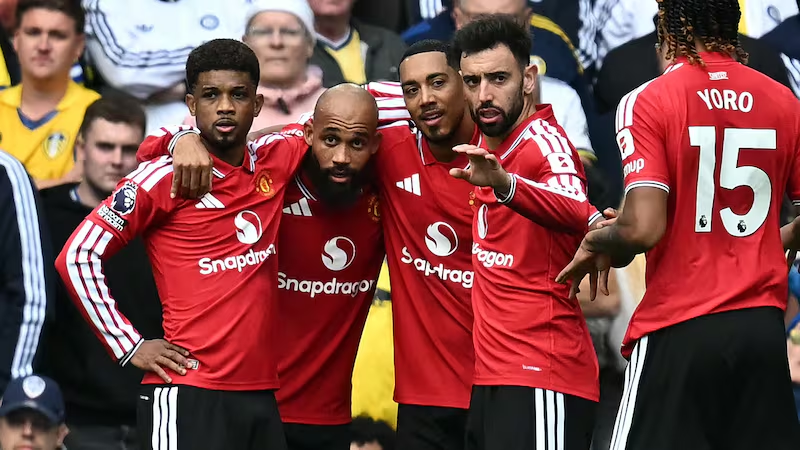
Man Utd vs Leeds: Why United Still Struggle for Consistency
Share Post:

The Manchester United vs Leeds 1–1 draw on 18 October was not just another tense rivalry result; it was a useful snapshot of a team trying to show fight while still wrestling with deeper performance issues. Bryan Mbeumo put United ahead in the first half, Dominic Calvert-Lewin levelled shortly after the interval, and the match at Elland Road ended with enough evidence for both encouragement and concern. This Manchester United vs Leeds analysis looks at team performance, football tactics, leadership and squad cohesion without pretending one spirited afternoon can answer every question.

FBL-ENG-PR-LEEDS-MAN UTD


What did the 1–1 draw actually tell us?

The draw told us that Manchester United still have collective resolve, but not yet the control or consistency to turn that resolve into a complete performance. United led through Mbeumo’s 35th-minute finish, made from a Youri Tielemans delivery, before Calvert-Lewin equalised in the 51st minute after Leeds worked a corner and Tarik Muharemović flicked the ball on. The result was therefore consistent with the rhythm of the match: United had a clearer first-half attacking moment, Leeds responded with pressure and territory after the break. (skysports.com)

That matters because “team spirit” is often used as a catch-all explanation after difficult games. At Elland Road, the effort was visible. United competed in a hostile setting, adapted to a changed shape and avoided collapse after Leeds equalised. Yet the evidence also showed limits: Leeds created several second-half situations, while United struggled to reassert authority after losing the lead. (leedsunited.com)

The match evidence in brief

A fair Manchester United vs Leeds analysis has to begin with what actually happened on the pitch, not the mood around either club. The game was emotional, physical and uneven, which made it revealing rather than simply dramatic.

Key match points included:

  • Venue and score: Leeds United 1–1 Manchester United at Elland Road on Sunday 18 October 2026. (skysports.com)
  • United’s goal: Mbeumo scored in the 35th minute, converting from close range after Tielemans supplied from the right. (skysports.com)
  • Leeds’ equaliser: Calvert-Lewin scored in the 51st minute after Stach’s corner and Muharemović’s flick-on. (leedsunited.com)
  • United’s shape: Michael Carrick used a back-three system, with Bruno Fernandes operating in an advanced, flexible role rather than as a conventional midfield organiser. (theguardian.com)
  • Second-half balance: Leeds carried more of the attacking threat after the interval, with Ao Tanaka, Noah Okafor and Anton Stach all having efforts as the hosts pushed for a winner. (leedsunited.com)
  • Discipline and edge: Fernandes and Gabriel Gudmundsson were booked, reflecting the competitive tone of the fixture. (leedsunited.com)

Those details stop the discussion becoming vague. United were not passive passengers, but neither did they produce a controlled away performance. The draw sat somewhere between resilience and missed opportunity.

Team spirit showed up, but so did familiar flaws

There is a difference between fighting for each other and functioning smoothly as a team. United showed the first quality more clearly than the second. They were willing to contest duels, defend their box for spells and keep the score level once Leeds had momentum. In that narrow sense, squad cohesion was not absent.

ADVERTISEMENTMYSOUND SPONSORED ADS
🔥 MYSOUND GLOBAL SPOTLIGHT
Monetize your tracks, access AI tools, and earn MSC streaming rewards directly.
START FOR FREE

However, cohesion is not just togetherness in difficult moments. It is also the ability to keep spacing, manage transitions, defend set plays and make repeatable decisions under pressure. Leeds’ equaliser came from a set-piece sequence, which is exactly the sort of moment where concentration, roles and communication are tested. When a side concedes soon after half-time, the issue is not only technical; it can point to how well the team resets mentally and structurally.

The second half also exposed a familiar problem with team performance: United could not consistently move the game back onto their own terms. Fernandes had attempts from distance and United did threaten in flashes, but Leeds had the stronger spell after the break and finished with enough chances to make the draw feel fragile from a United perspective. (leedsunited.com)

The tactical adjustment offered energy rather than control

Carrick’s changed formation gave United something useful: a platform to compete. A back three can help a side protect central areas, create wing-back outlets and give attackers more freedom between the lines. In the first half, that helped United find Mbeumo, who had already headed wide before taking his next significant chance. (skysports.com)

But football tactics are judged over 90 minutes, not just by whether an idea produces a goal. With Fernandes pushed into a freer, more advanced role, United gained movement but sacrificed some midfield rhythm. That trade-off can make sense in a specific match, especially away at Elland Road, yet it also explains why United sometimes looked less able to slow the game down when Leeds’ pressure rose.

Leeds, meanwhile, leaned into width, deliveries and set-piece pressure. Bogle’s forward runs, Stach’s dead-ball quality and Calvert-Lewin’s presence gave the home side a direct route back into the game. The equaliser was not a random event; it came from an area where Leeds had repeatedly tried to ask questions of United’s defensive organisation. (leedsunited.com)

Everything you need to know about Man United vs Leeds at Croke Park

Can team spirit address deeper issues?

Team spirit can help a club survive difficult phases, but it cannot, by itself, solve deeper problems in performance consistency, tactical clarity or decision-making. Against Leeds, United’s spirit helped them compete in a hostile away fixture; it did not stop them fading after the interval, conceding from a set piece or struggling to build sustained pressure after the equaliser.

That distinction is crucial. Spirit is emotional fuel. It can lift intensity, sharpen recovery runs and keep players engaged when the crowd is against them. But if the same patterns keep recurring — losing leads, relying on isolated moments, or failing to control long stretches — the answer has to include coaching detail, selection clarity and leadership standards as well.

The most useful way to view the Manchester United vs Leeds 1–1 draw (18 October): can team spirit address deeper issues? Match-based analysis of performance consistency, tactics, leadership, and squad cohesion points to a balanced answer. Yes, spirit is necessary. No, it is not sufficient.

Performance consistency remains the central concern

ADVERTISEMENTMYSOUND SPONSORED ADS
🔥 MYSOUND GLOBAL SPOTLIGHT
Monetize your tracks, access AI tools, and earn MSC streaming rewards directly.
START FOR FREE

Consistency is not simply about winning every week. It is about whether the same positive behaviours appear often enough to be trusted. At Elland Road, United had phases of intensity, a well-worked opening goal and enough defensive resistance to leave with a point. But the drop-off after the break weakened the impression of progress.

Opta’s post-match analysis noted that United had won only one of their first seven Premier League matches, with four draws and two defeats. It also recorded that Leeds edged the expected goals total, with most of their xG coming in the second half. Those figures match the eye test: United did some good work, but not enough of it for long enough. (theanalyst.com)

This is why the draw felt like a warning as well as a response. A team can show commitment in one match and still lack a repeatable performance model. The practical question for any coaching staff is not “Did the players care?” but “Can they reproduce the useful parts while reducing the avoidable errors?”

Leadership is about turning effort into habits

Leadership after a game like this should not be limited to strong quotes or visible frustration. It has to translate the emotional response into training-ground habits. If United want better outcomes from similar matches, the Leeds evidence points to specific areas rather than abstract calls for more passion.

Manchester United's Bryan Mbeumo, second left, celebrates with teammates after scoring the opening goal. AFP

A practical review would focus on:

  1. Set-piece responsibility: who attacks the first contact, who tracks the second ball, and who reacts if the delivery is flicked on.
  2. Game-state control: how the team behaves when leading away from home, especially in the first 10 minutes after half-time.
  3. Midfield connection: whether the chosen shape gives enough passing options to escape pressure and protect the defence.
  4. Chance quality: how United turn promising wide attacks into repeatable high-value chances rather than sporadic moments.
  5. Emotional discipline: how senior players set the tone in a rivalry match without letting the contest become too reactive.

Those are leadership issues as much as tactical ones. Captains, coaches and senior players all influence whether a team responds to pressure with calm structure or merely more running.

The takeaway from Elland Road

The 1–1 draw did not prove that Manchester United are fixed, and it did not prove that team spirit is meaningless. It showed something more awkward: spirit was present, but the deeper issues remained visible. United competed, scored first and avoided defeat, yet Leeds’ second-half pressure, the set-piece equaliser and United’s uneven control kept the performance from becoming a convincing statement.

For supporters and analysts, the fairest conclusion is measured. Team spirit can be the foundation for improvement because players who keep fighting give coaches something to build on. But the match evidence from 18 October shows that fight must be paired with clearer football tactics, sharper leadership and more consistent team performance before it becomes anything more than a brave draw at Elland Road.


ADVERTISEMENTMYSOUND SPONSORED ADS
🔥 MYSOUND GLOBAL SPOTLIGHT
Monetize your tracks, access AI tools, and earn MSC streaming rewards directly.
START FOR FREE
Share Post:

Related Articles

Say What You Pay: The New Law That Forces Job Adverts to Show the Salary

Say What You Pay: The New Law That Forces Job Adverts to Show the Salary

From now on, bosses will have to tell you what a job pays before you apply. Only 18% of employers do that today. In a market where 715,000 young people are out of work, that one change could save jobseekers hours — and stop the guessing game for good. The advert will have to say what it pays Prime Minister Andy Burnham announced on 6 November that the Government will make it a legal requirement for all employers to say what a job pays in the advert. The plan is called “say what you pay”, and the Government says it will bring forward the legislation as soon as possible. Burnham put it plainly: “Whether you’re a young person starting out or a parent trying to support your family, you should know what a job pays before spending your time and effort applying for it. That’s why we will make it a legal requirement for all employers to say what you pay.” In the meantime, he is calling on all businesses to start publishing pay on their job ads now, rather than waiting for the law to change. Most adverts hide the pay The reason the law is needed is in the numbers. Research from the Chartered Institute of Personnel and Development (CIPD) shows that only 41% of employers always publish salary ranges in their job ads — and just 18% always publish the specific salary. That means most of the time, you are applying blind. The words jobseekers know too well — “competitive salary”, “salary depending on experience”, or no pay mentioned at all — are about to become a thing of the past. The proposed requirement replaces that vagueness with a minimum standard: the pay, or at least the pay range, up front, before you spend your time and effort applying. And this is not a policy being pushed against business. The Cabinet Office launched a consultation into pay equality in the summer, and early analysis showed 94% of respondents backed greater transparency — including 93% of businesses. The consultation closed on 27 October. Employers, it turns out, largely agree the current system wastes everyone’s time. Why this hits young people hardest This lands the day after the Magazine reported that only 15% of UK bosses are hiring confidently — in a market where youth unemployment is 15.6% and 981,000 young people are outside work, education or training. This matters most to the people with the least experience to trade on — young jobseekers. The latest official figures show youth unemployment at 15.6% for 16- to 24-year-olds in June to August 2026, with 715,000 young people unemployed — 54,000 more than a year earlier. Vacancies have fallen to 691,000, the lowest outside the pandemic since 2014. And 981,000 young people — 13.0% of 16- to 24-year-olds — are not in education, employment or training. When there are fewer jobs and more people chasing them, every application costs time you cannot get back. Writing a tailored CV, preparing for an interview, travelling across town — all for a job that might pay less than you need to live on. Knowing the salary before you apply lets you filter out the jobs that do not pay enough and focus on the ones that do. It also stops the awkward dance at the end of the process, where a young applicant with no experience is expected to name a number first. The Government says the change will also help tackle pay gaps that disadvantage women, and it is part of a wider push on youth inactivity — the Milburn Review into young people and work is due to publish its final report in the coming weeks. Its interim findings put the cost of youth inactivity at £125 billion a year. What the law will not do yet This is an announcement, not a law in force. There is no implementation date yet, and the Government says further details — what exactly employers will have to publish, which employers it covers, and how it will be enforced — will be set out “in due course”. For now, employers face no new legal obligation. That is worth knowing, because it means the change will not happen overnight. But the direction is clear, and the UK is not alone: pay transparency rules have already come into effect across the European Union, requiring employers to tell jobseekers the starting salary or pay range in the advert ahead of an interview. The Autumn Budget on 28 October was already moving in the same direction for young people: a £3,000 Youth Jobs Grant for businesses hiring eligible young unemployed people, the Jobs Guarantee extended to 22- to 24-year-olds, and a £2,000 payment for smaller employers taking on young apprentices. The pay law is the next piece — making the jobs that do exist easier to judge. What you can actually do The law is coming, but you do not have to wait for it to job-hunt smarter. Five moves that help right now: Ask the pay before you apply. If an advert hides the salary, ask the recruiter or hiring manager what the range is before you invest hours in an application. You are allowed to ask. Check the going rate. Before you apply, look up what the role usually pays in your area, so you know whether the number — when you get it — is fair. Do not name a number first. If an employer pushes you to state your salary expectations early, give a researched range, not a single figure — and remember the law is moving in your favour. Use the Budget help. If you are 16 to 24 and out of work, ask about the Youth Jobs Grant and the Jobs Guarantee — employers get support to hire you, and that is leverage. Apply where the pay is already public. Employers who publish salaries now are telling you something about how they treat people. Prioritise them. The guessing game is ending. Until…

Only 15% of UK Bosses Are Hiring — and Young People Are Paying the Price

Only 15% of UK Bosses Are Hiring — and Young People Are Paying the Price

Hiring confidence has collapsed, apprenticeships are being cut and entry-level jobs are drying up — just as around a million young people sit outside work, education or training. The Budget raised pay, but who is actually hiring? The first rung of the ladder is disappearing If you are young and looking for your first proper job, the market is moving against you. That is the blunt message of the CBI/Pertemps Employment Trends Survey 2026, published on 13 October. Only 15% of businesses say they are hiring confidently, down from 24% in 2025. Labour costs are now the number one threat to the competitiveness of the UK jobs market, named by 73% of firms. And the squeeze is landing hardest on the people with the least experience. More than half of businesses (53%) say cost pressures mean they are offering fewer apprenticeships than they would like. Almost half (44%) say rising recruitment and onboarding costs are pushing them towards experienced hires, cutting entry-level opportunities for young people. Another 45% say they simply do not have the demand to justify creating entry-level roles at all. Rain Newton-Smith, chief executive of the CBI, put it plainly: “Higher employment costs and growing regulatory pressures are making firms more cautious about hiring and investment. That matters not just for businesses, but for living standards and particularly for young people trying to get their first foot on the career ladder.” A million young people locked out The survey lands against a bleak backdrop. Around one million 16- to 24-year-olds in the UK are now classified as not in employment, education or training. Retailers — traditionally one of the biggest employers of young people — warn that Budget-related costs are making it harder to take young staff on, with around £250 million in extra business rates and £2 billion in employment costs from wage increases. High street trouble is adding to the pressure. Poundland has filed a notice of intention to appoint administrators, putting around 12,000 jobs at risk. And even for those in work, pay is stalling: only 47% of firms expect to raise pay in line with or above inflation at their next review, compared with 70% in 2024. The Budget gave with one hand Chancellor John Healey’s Autumn Budget, delivered on 28 October, did bring help. The National Minimum Wage and National Living Wage both rise by 3.9% in April, at the start of the new tax year. The minimum wage for 18- to 20-year-olds currently stands at £10.85 an hour; the Living Wage for workers aged 21 and over is £12.71. Twenty million households will also receive a one-off £100 payment towards energy bills, and a temporary VAT cut has been extended until 1 July, cutting the annual price cap by £50. But the small print is less cheerful. The Office for Budget Responsibility says it expects no growth in real earnings next year, and it has cut its growth forecast for 2027 to 1%, down from 1.6%. When the survey asked firms about an estimated 3.7% rise in the Living Wage to £13.18, 39% said they would offset the cost by raising prices, 29% by reducing employment and 22% by cutting business investment. A pay rise is welcome. A pay rise in a market where nobody is hiring is a different story. Still living at home The squeeze shows up in how young people actually live. The latest official figures show 35% of men aged 20 to 34 were living at home with their parents last year, compared with 22% of women in the same age range. The Budget did offer one longer-term promise for first-time buyers: a new First Time Buyer ISA launching on 6 April 2029, replacing the Lifetime ISA for new savers, paying a 25% bonus on your final balance — up to £20,000 in total — on deposits of up to £4,000 a year. The penalty for using Lifetime ISA funds on a home worth more than £450,000 has been cut from 25% to 20% from 29 October, so savers now get back at least what they put in. The Bank of England’s rate rise to 4% is already pushing up borrowing costs. 2029 is a long way off for someone trying to move out next year. But if you are saving, the new account is worth knowing about — and the penalty cut helps anyone already holding a Lifetime ISA. What you can actually do The picture is tough, but it is not hopeless. Half of employers told the CBI that cutting the regulatory burden on apprenticeships would make the system work better — so apprenticeships are still on the agenda, and pressure is building to fix them. Big employers are still recruiting: PwC alone has taken on 1,300 graduates this year. Five moves that help right now: Chase apprenticeships, not just jobs. They are under pressure, but they still exist — and they pay you while you learn. Apply where experience matters less. Retail, hospitality and care have always been the first rung; they are also the sectors feeling the squeeze, so apply early and apply widely. Make your CV prove something. A short course, a volunteer shift, a side project — anything that shows a hiring manager you can be trusted with real work. Use the pay rise. When the new minimum wage rates land in April, check your payslip. If you are 18 to 20, your minimum is £10.85 an hour now and rises 3.9% in April; if you are 21 or over, it is £12.71. Save where the bonus is. If you are putting money aside for a first home, a Lifetime ISA still pays a 25% bonus — and the penalty for using it on a pricier home has just been cut. The jobs market is not closed. But the door is narrower than it was, and it is young people squeezing through it. The bottom line Firms are cautious, apprenticeships are shrinking and a million young people are outside work…

Bots took your RAYE ticket — and Parliament just blinked on the resale cap

Bots took your RAYE ticket — and Parliament just blinked on the resale cap

1.8 million people wanted in. There were 5,000 seats. And hundreds of thousands of the people in the queue weren’t people at all. RAYE said it herself. On 13 October she posted on Instagram that her one-off show at the Royal Albert Hall on 23 October had drawn 1.8 million registrations — and that “AI bots” had flooded the presale with “hundreds of thousands of fake registrations”. The presale asked fans to pre-register for a chance at a code. The bots registered too, faster than any human could. She is not the only one. On 21 October, Sam Fender’s presale for his Proper Massive stadium tour of the UK and Ireland in June 2027 was hit by what he called a “sophisticated bot attack” on the ticketing site Gigantic. The presale was pushed back 24 hours so that, in his words, “real fans get the tickets”. Gigantic said there had been an “unusually high volume of suspicious activity”. This is the normal now. And this week, Parliament had a chance to act on the other half of the problem — the resale market where the bots’ tickets end up — and voted not to. The vote that failed On Wednesday 4 November, MPs voted 286 to 62 against an amendment that would have made it illegal to resell tickets for major sporting events above their original price, including fees. The amendment was put forward by Liberal Democrat MP Anna Sabine as part of the Sporting Events Bill. Ministers said the vote was not a retreat. The real fix, they said, is a separate piece of legislation, a Ticket Tout Ban Bill, that would generally ban reselling live-event tickets above face value and put new duties on the resale platforms. But that bill is still being drafted, and it will not feature in the parliamentary session that runs until May 2027. Labour promised in its 2024 election manifesto to cap ticket resale at face value. Two years on, there is still no cap, no ban, and no date. The artists who backed the promise — The Cure, Ed Sheeran, Dua Lipa, Radiohead among them — are still waiting. So are the fans. Who actually runs the ticket market The bot problem and the resale problem are the same problem, and they sit on top of a market that is more concentrated than most fans realise. A parliamentary committee report found that Live Nation directly controlled 58% of the 23.1 million primary tickets on sale in the UK in 2025. Count the affiliated companies and the figure rises to 66%. Live Nation owns Ticketmaster, and it also promotes shows, runs venues and runs festivals — the same company can sell you the ticket, own the room and take a cut at every step. The Business and Trade Committee has urged the Competition and Markets Authority to launch a full investigation into the live music market before the end of 2026. The CMA has not given a timetable. The committee’s report described a “climate of fear” around the dominant companies, with artists, managers, independent promoters and grassroots venues afraid to speak out. The scale of the bot traffic is hard to believe until you see the numbers. The Royal Albert Hall told Billboard UK that it routinely blocks millions of bot requests during ticket sales — more than 38 million in a single 24-hour period, separate from the RAYE sale. What it costs you Live music is big business. Spending on music tourism in the UK reached £11.2 billion, with 24.7 million music tourists attending events in 2025. That money is real, and so is the price fans pay for it. Do the fan’s maths. A ticket listed at £65 face value can be £180 or more on a resale site before fees. A “golden circle” standing spot at a stadium show — the premium front section Sam Fender’s fans were arguing about this week — can cost double the standard ticket. For a young person on a first wage, the difference between face value and resale is the difference between going and not going. That is why this story matters beyond the charts. A ticket is not a luxury for the people reading this site. It is the one night out they save for, the birthday present, the first gig with friends. When a bot takes it and a tout sells it back at three times the price, something has been taken from a real person. What you can actually do You cannot fix Parliament from your phone. But you can make yourself a harder target. Buy resale only at face value. Ticketmaster’s official fan-to-fan resale, Twickets and DICE all cap resale at face value. If a site will not show you the seat or the face value, walk away. Register for presales the minute they open, and use the artist’s own mailing list rather than a link forwarded in a group chat. The RAYE presale worked on registration codes — the bots won by registering first and in bulk, so speed and the official channel are your only edge. Never pay by bank transfer for a ticket. A card or PayPal gives you a way back if the ticket never arrives. Screenshot the listing, the price and the seller’s name before you pay. And when a sale goes wrong, report it. The FanFair Alliance campaign collects fan experiences, and every report is evidence for the investigation MPs keep asking the CMA to run. The question RAYE’s fans did everything right. They registered, they waited, they queued. The bots were faster, and Parliament blinked. The question now is how long fans are expected to keep losing a rigged race — and what comes first, the ban or the next 1.8 million-person queue. Have you ever lost a ticket to a bot, or paid double for one on resale? Tell us what happened. We read every reply.

Mortgage Rates After the Bank of England Rise to 4%: What First-Time Buyers Should Do Now

Mortgage Rates After the Bank of England Rise to 4%: What First-Time Buyers Should Do Now

The rise in one paragraph The Bank of England raised Bank Rate from 3.75% to 4% on Thursday 5 November 2026, announced at noon. The Monetary Policy Committee voted 8 to 1 in favour, with Catherine Mann the one dissenter, wanting a bigger rise to 4.25%. It is the first Bank of England rate rise since August 2023. The Bank had held at 3.75% at its three previous meetings, on 18 June, 30 July and 17 September 2026. It moved because inflation is too high: CPI inflation was 3.5% in the year to September 2026, against the Bank’s 2% target, and the Bank expects it to peak at around 5% by mid-2027. The next decision is on 17 December 2026. If you are saving for your first home, here is what it means and what to do about it. Where mortgage rates stand today Fixed rates were already high before Thursday, because lenders price on what they expect the Bank to do. Moneyfacts put the average two-year fixed rate at 5.97% and the average five-year fixed rate at 5.99% just before the decision, and the average rate on new mortgages at 5.89%, its highest since November 2023. At the start of the year the average two-year fixed rate was 4.83%, so on a £250,000 mortgage over 25 years that adds roughly £170 a month compared with a deal taken out in January. The best deals are lower, but only with a big deposit. Mortgage Advice Bureau figures updated on 5 November put the best two-year fixed rate at 4.78% and the best five-year fixed rate at 4.78%, both from Halifax at 60% loan-to-value, which means a 40% deposit. The best two-year tracker was 3.99%, also from Halifax at 60% loan-to-value. With a 10% deposit or less, expect a higher rate. The average standard variable rate, the rate you land on if your deal ends and you do nothing, was 7.13% before the decision. What the rise does to your monthly payment If you already have a tracker mortgage, your payment will go up within days. As a guide, a 0.25% rise on a £200,000 repayment mortgage over 25 years adds about £29 a month, or about £348 a year. On a £250,000 mortgage over the same term, a 0.25% rise adds about £37 a month. If you are on a fixed rate, nothing changes until your deal ends. That is the point of fixing. But the rate you will be offered when you remortgage or buy is set by the market now, and the market has already moved. More than 2.3 million households come off fixed deals during 2027. For them, the rate on offer in the next few months matters more than the one they locked in years ago. Fixed or tracker? There is no single right answer, and this article is general information, not financial advice. A fixed rate gives you certainty: your payment stays the same for two or five years, whatever the Bank does next. A tracker follows Bank Rate, so your payment moves up or down with it. Right now the average two-year tracker is around 4.68%, below the average two-year fixed rate of 5.97%. That gap is the market betting rates will fall again. If they do, a tracker wins. If the Bank raises rates again, it loses. Ask three questions. First, could you still pay if your rate went up another 0.5%? If not, certainty matters more than a lower starting rate. Second, how long will you stay? If you may move in two years, a two-year fix or a tracker with no early repayment charge keeps your options open. Third, does the deal charge a fee? A cheap-looking rate with a £1,999 fee can cost more than a slightly higher rate with no fee. Work out the total cost over the deal, not just the headline rate. Your First Home: what to do before February The Your First Home scheme does not change because of Thursday’s decision. It is a government equity loan scheme for first-time buyers in England, backed by £4.7 billion over five years. You put down a deposit of between 2.5% and 15%, the government lends you 20% of the price through an equity loan that is interest free for five years, and a normal repayment mortgage covers the rest. Income caps are £110,000 outside London and £140,000 inside London, with price caps of £650,000 in inner London and £500,000 in outer London. Pre-registration opens by the end of December 2026, applications open in February 2027, and the first loans are expected from April 2027. If you plan to apply in February, the rate picture then matters more than this week’s. Oxford Economics expects Bank Rate to reach 4.25% by February 2027. That is a forecast, not a fact. But run your numbers at 4.25% and at 4.5%, not only at today’s rate, before you decide what you can afford. Do the groundwork now: check your credit file for errors, gather three months of payslips and bank statements, and ask a lender for a decision in principle. It costs nothing, and it tells you roughly what you can borrow. Five things to do this week First, if you already have a mortgage, find out when your deal ends and what type it is. If it ends within six months, ask your lender about locking in early; you can often switch to a cheaper deal before it starts if rates fall. Second, if you are saving for a deposit, check your savings rate: the average easy-access rate was 2.56% before the decision, below inflation of 3.5%, so compare accounts and switch when your provider falls behind. The Cash ISA limit stays at £20,000. Third, do not drift onto the standard variable rate. Set a reminder for the month your deal ends. On a £250,000 mortgage over 25 years, the average SVR of 7.13% works out at about £1,788 a month, against about £1,606 on the average two-year fixed rate:…

Man Utd vs Leeds: Why United Still Struggle for Consistency | MySound