Free Streams vs Paid Streams: Which Earns More for Artists?
Millions of streams can look like a breakthrough, but the number on the dashboard is only part of the story. What really matters is where those streams came from: paid users, free tiers, trials, or platforms that do not properly support royalties. For artists, managers, labels, and independent creators, understanding this difference can be the gap between chasing attention and building real income.
Why do big streaming numbers not always mean big earnings?
Big streaming numbers do not always mean big earnings because not every stream carries the same value. Streams from paying subscribers usually generate more meaningful royalties, while streams from free tiers, trial users, or unsupported platforms often produce very small payments, or sometimes no useful income at all. That is why the debate around free streams vs paid streams is not just about audience size; it is about the quality of the revenue behind the listen.
A million plays can feel impressive, and in terms of visibility, it may be. It can help a track appear more active, build social proof, and give an artist something to promote. But if most of those plays come from low-value sources, the financial result may be far smaller than expected.
This is where many creators get caught out. They celebrate the headline figure without asking the most important question: who paid for those streams, and through what kind of service?
The simple difference between free and paid streams
A paid stream normally comes from someone using a paid subscription on a licensed streaming platform. That listener pays a monthly fee, and part of the platform’s revenue is distributed through rights holders, distributors, publishers, labels, and other relevant parties before the artist receives their share.
A free stream, by contrast, usually comes from an ad-supported account, a promotional trial, or a listening environment where the user is not paying directly. These streams can still have value, especially for discovery, but they tend to generate much lower royalties because the money behind them is weaker.

Think of it like footfall in a shop. A busy shop looks exciting, but if most visitors only browse and never buy, the till may stay quiet. Streaming works in a similar way. The audience size matters, but the paying audience matters more.
In both the UK and the US, real earnings from streaming primarily come from paid subscriptions. Ad-supported listening and trial activity may add something, but subscription streaming services are generally the stronger revenue source because there is a recurring payment behind the listener.
Where low-value streams often come from
Not all low-value streams are bad. Some are part of a healthy discovery strategy. The problem starts when creators treat every stream as equal, then feel confused when the income does not match the audience number.
Common lower-value sources include:
- Free tiers: Listeners use the platform without paying a subscription. Revenue is usually linked to advertising, which can be limited compared with subscription income.
- Free trials: A user may be testing a service for a short period. Depending on the platform’s model and territory, these streams may not produce the same return as fully paid listening.
- Unsupported platforms: These may include places where music is uploaded, shared, or embedded without a strong royalty structure. If the platform is not properly licensed or monetised, the stream count may look active while the income remains tiny.
- Promotional placements with passive listening: A track might be played in the background, skipped quickly, or served to users who are not strongly engaged. This may help reach, but not necessarily earnings.
- Markets with weaker advertising income: Even on legitimate services, free-tier revenue can vary depending on advertiser demand and user location.
The key point is not that free listening has no purpose. It can introduce new people to your music. But if the aim is income, you need to know whether those listeners are likely to become paying fans.
What makes subscription streaming services more valuable?
Subscription streaming services are more valuable because they are funded by regular payments from listeners. Instead of relying mainly on advertising, these platforms collect subscription fees, which usually create a larger revenue pool to share with rights holders. For artists trying to build sustainable income, paid listening is therefore a more reliable signal than raw stream count.
This does not mean every paid stream produces the same payout. Streaming royalties are affected by many factors, including the service, country, user plan, rights ownership, distributor terms, and how revenue is allocated. However, the general principle is clear: a stream backed by a paid account is usually stronger than a stream backed by a free account.
For creators in the UK and US, this distinction is especially important because these are mature streaming markets with a strong base of paying subscribers. If your listeners are mostly on paid plans, your catalogue has a better chance of turning attention into actual earnings.
Paid subscriptions also suggest deeper listener intent. Someone who pays for a music service is often more likely to save tracks, build playlists, follow artists, listen repeatedly, and explore catalogues. Those behaviours can support both royalties and long-term fan growth.
Do not celebrate stream counts alone
Here is the message worth remembering: do not celebrate view or stream counts alone. A large number may look impressive in a press caption, but it does not tell you whether the audience is producing meaningful revenue. Always look at the revenue source behind the streams before calling a campaign successful.
This is especially important when a song suddenly gains traction. A viral moment can bring attention from all kinds of places, including short clips, free accounts, reposts, trials, or platforms that do not support proper monetisation. That attention can still be useful, but it needs a follow-up plan.
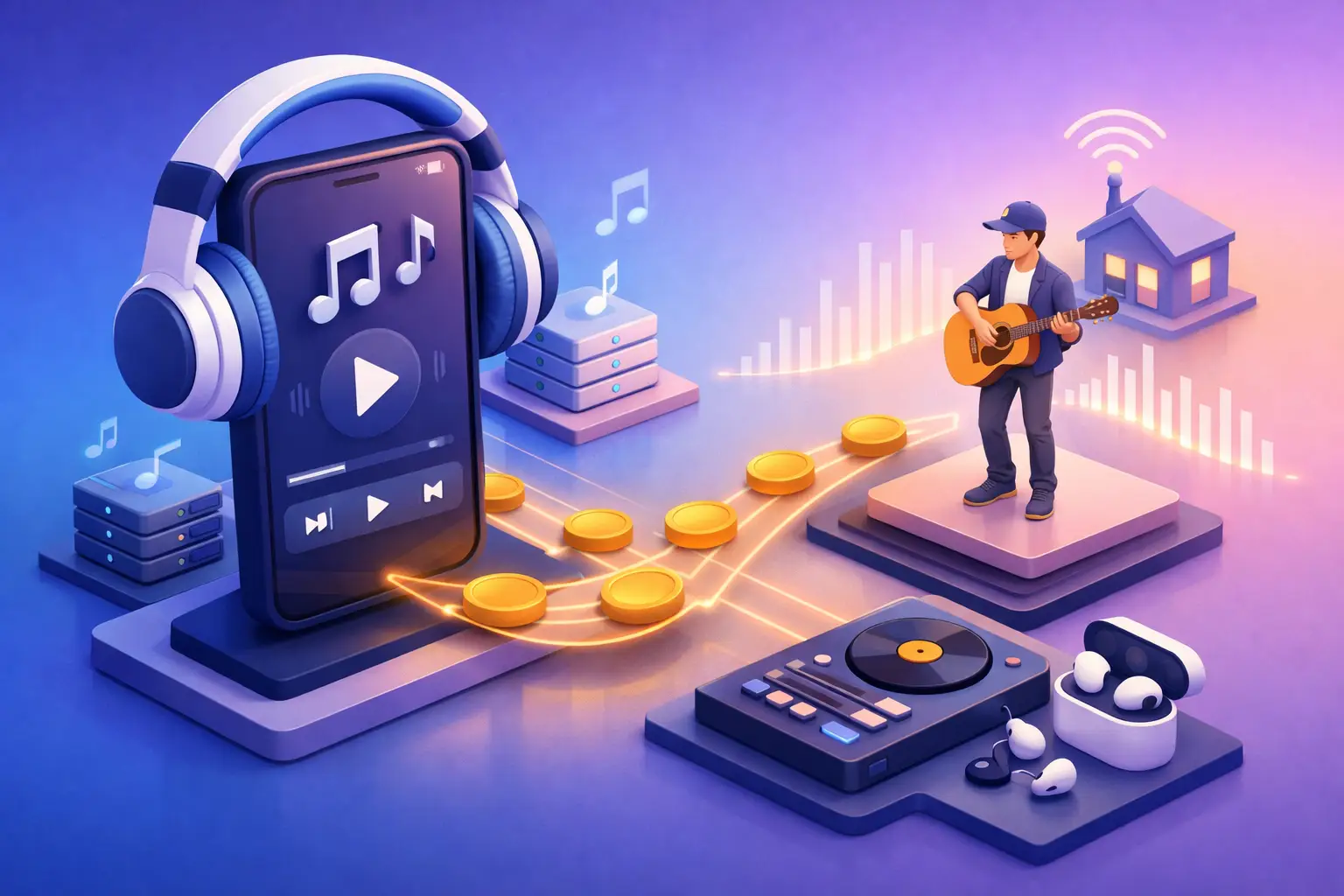
Ask what the stream count is really showing. Is it paid listening from committed fans? Is it casual free-tier discovery? Is it traffic from a platform that boosts visibility but does little for income? Once you know that, you can decide whether to celebrate, optimise, or change direction.
A practical streaming service comparison mindset
A useful streaming service comparison is not only about which platform has the biggest audience. It is about which platforms help you reach listeners who engage, return, and pay. For musicians and music marketers, the best platform is not always the one with the flashiest number; it is the one that supports the right kind of growth.
When comparing streaming performance, consider:
- Revenue quality Look at whether streams are coming from paid subscriptions, ad-supported accounts, trials, or other sources. If your distributor or analytics platform provides this detail, use it.
- Listener behaviour Saves, repeat listens, playlist adds, follows, and full-track plays often say more than a one-off spike. These actions suggest that listeners may come back.
- Territory mix Streams from different countries can generate different levels of revenue. A campaign may look strong globally but still produce modest income if much of the activity comes from lower-value sources.
- Platform support Focus on licensed services that have a clear payment model. Unsupported platforms may offer exposure, but exposure without a royalty pathway should not be treated as income.
- Fan conversion The strongest streaming strategy connects listeners to something deeper: mailing lists, merchandise, live shows, memberships, direct support, or future releases.
This approach keeps you from treating all streams as equal. It also helps you build a more honest picture of what is actually working.
Turning free attention into paid listening
Free streams can still play a useful role when they are handled properly. They can help new listeners discover an artist without friction. The challenge is to move people from casual attention into stronger engagement.
Start by making the next step obvious. If someone discovers a song through a free tier, social clip, or trial account, guide them towards following the artist on a paid streaming platform, saving the track, joining a mailing list, or listening to a full project. Do not assume discovery will naturally become loyalty.
You can also shape your calls-to-action around listening quality. Instead of simply saying “stream the song”, encourage fans to save it, add it to their own playlists, follow the artist profile, and listen on their usual paid platform if they have one. These are small actions, but they point fans towards behaviour that supports real earnings.
Creators should also review campaigns after the excitement fades. If a promotion generated thousands of free or low-value plays but few followers, saves, or paid streams, it may need adjusting. If a smaller campaign produced fewer streams but more committed listeners, that may be the better long-term model.
Better questions to ask after a release
After a release, it is tempting to look at the biggest number first. That is natural, but it can lead to poor decisions. Better questions give you a clearer view of performance.
Ask yourself:
- Which platforms produced the most engaged listeners, not just the most plays?
- How many streams came from paid subscription users compared with free-tier users?
- Did trials or promotional traffic inflate the count without improving income?
- Are any plays coming from unsupported platforms that offer little or no royalty value?
- Did listeners save, follow, share, or return to the track later?
- Which territories, playlists, or campaigns created the strongest revenue signals?
- What can be repeated, improved, or stopped before the next release?
These questions shift the focus from vanity metrics to practical insight. They also make it easier to explain results to collaborators, investors, bandmates, or clients without relying on hype.
The real goal is sustainable music income
The point is not to dismiss big numbers. Reach matters, and large audiences can open doors. A high stream count may attract playlist attention, press interest, booking opportunities, or social proof that helps an artist move forward.
But reach and revenue are not the same thing. If your strategy rewards numbers without checking income quality, you may end up chasing the wrong kind of growth. The better aim is to combine discovery with monetisation, so free attention becomes a pathway towards paid listening and deeper fan support.
For artists in the UK and US, paid subscriptions remain the key engine of real streaming earnings. That should influence how campaigns are planned, how success is measured, and how fans are encouraged to listen. Big numbers can still matter, but only when you understand what sits behind them.
The next time a track hits a milestone, celebrate it carefully. Then look past the headline count. Ask where the streams came from, whether the listeners were paying, and what you can do next to turn attention into income.
So, what strategy will you adopt to prioritise paid streams and increase real earnings? Whether it is guiding fans towards subscription platforms, tracking revenue sources more closely, or rethinking low-value promotion, the smartest move is to focus on streams that support both visibility and a sustainable future.