How Robotics Is Changing Jobs in the UK: Opportunities and Risks
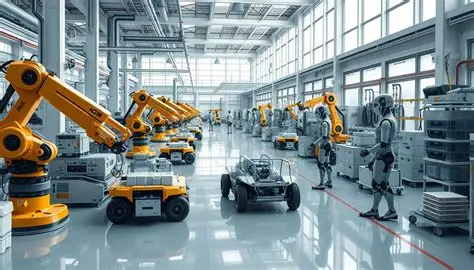
Robotics now extends beyond specialist engineering, prompting UK employers, workers, educators, and policymakers to consider its growing impact on jobs, skills, and workplaces. Britain’s investment in robotics raises important questions about which jobs automation could create, change, or replace across different industries and communities. Rather than simply replacing human workers, robotics will reshape work, generate new opportunities, and require targeted support to help people adapt successfully. Healthcare, farming, manufacturing, logistics, construction and public services could all feel the effects in different ways.

Which jobs could robotics create, change or replace?
Robotics could create jobs in design, installation, maintenance, software, data, safety, training and operations, while changing many roles that remain centred on human judgement, care, supervision or problem-solving. Robots may replace repetitive, physically demanding, or hazardous tasks, particularly when workplaces follow predictable processes and standardise operations. Robotics could create jobs across Britain while disrupting employment for workers who currently perform routine tasks.
New roles may include robot technicians, automation engineers, systems integrators, simulation specialists, field service engineers, robotics trainers and safety assessors. These jobs are likely to sit across different sectors rather than in one narrow “robotics industry”. A hospital, farm, food factory or warehouse may all need people who understand how robotic systems work in real operating conditions.
Existing jobs may change more quietly. A nurse might spend less time moving equipment and more time with patients. A farm worker might supervise autonomous machinery and interpret sensor data. A factory operative might monitor several automated cells rather than manually repeating one production step. In these cases, robotics does not remove the job entirely, but it changes the balance of physical, digital and judgement-based work.
Roles most exposed to replacement are those built around highly repetitive movement, simple inspection, basic picking, predictable transport or routine machine loading. Even then, replacement is rarely instant. Organisations need investment, redesigned processes, training, maintenance capability and employee acceptance before robotics becomes part of everyday work.
Healthcare robotics will support people-facing work
Robotics could help the NHS and care providers manage staff shortages, ageing populations, and physically demanding tasks. Healthcare robots can support surgery, rehabilitation, pharmacy services, cleaning, logistics, and patient monitoring across hospitals and care facilities. They can transport supplies, dispense medicines, disinfect rooms, assist mobility exercises, and help clinicians perform precise medical procedures. These technologies could reduce workloads, improve efficiency, and allow healthcare professionals to dedicate more time to patient care.
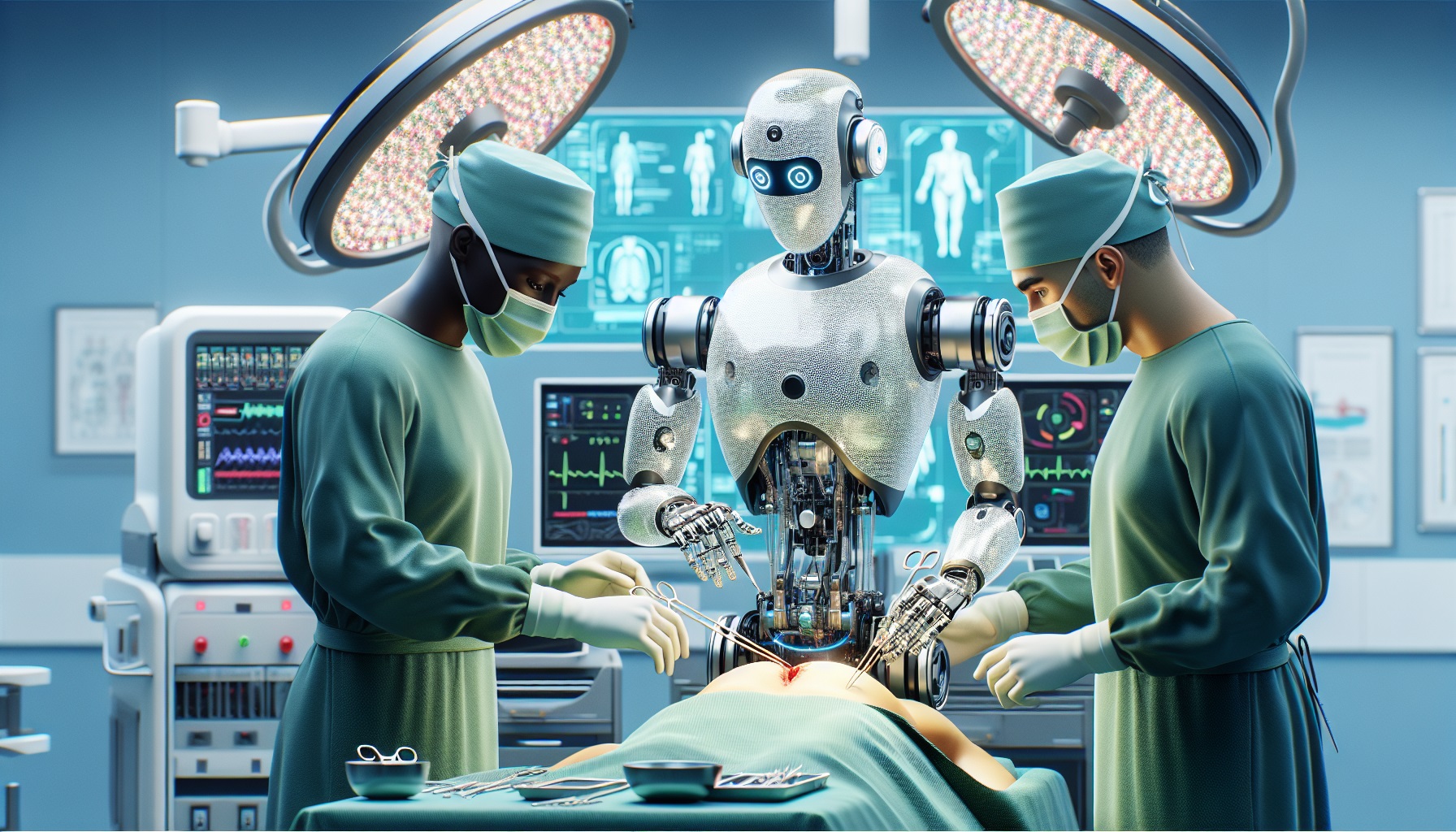
The human element remains central. Healthcare professionals rely on empathy, safeguarding, clinical judgement, and trust, so robotics will likely reshape rather than replace care roles. Staff must recognise suitable robotic applications, identify errors quickly, reassure patients, and maintain safe, compassionate care standards. They should also report concerns promptly whenever robotic systems malfunction, produce inaccurate results, or compromise patient safety.
For workers, the skills shift could be significant. Healthcare assistants, nurses, porters, pharmacists and theatre teams may all need practical familiarity with robotic systems. This does not mean every worker becomes an engineer. It means more staff may need confidence with digital interfaces, basic troubleshooting, data quality, safety protocols and working alongside automated equipment.
Robotics may also create specialist tech jobs UK employers struggle to fill, including roles in medical robotics support, clinical engineering, cyber security, procurement and compliance. If adoption is handled carefully, healthcare robotics could reduce strain on staff by taking on some heavy, repetitive or time-consuming duties. If handled poorly, it could add another layer of complexity without giving workers enough training or time to adjust.
Farming and food production could become more precise
British farming faces labour shortages, seasonal peaks, weather uncertainty and pressure to improve productivity while reducing environmental impact. Robotics could support tasks such as weeding, harvesting, crop monitoring, milking, feeding, grading and packing. In fields, autonomous or semi-autonomous machines may use cameras, sensors and mapping systems to identify plants, target weeds or collect crop data more accurately than broad manual inspection allows.
This could change the nature of agricultural work. Fewer people may be needed for some repetitive manual tasks, especially where machines can work for long periods in consistent conditions. At the same time, farms may need more workers who can manage equipment, interpret data, maintain sensors, plan robotic field operations and make decisions from digital farm information.
Food production and processing could see similar change. Robots can help with repetitive handling, cutting, packing, sorting and quality checks, particularly where hygiene, consistency and speed matter. However, food environments can be complex because products vary in size, shape, texture and fragility. That means human oversight, technical maintenance and process knowledge remain important.
A useful skills pathway for farming might include:
- Machine supervision: understanding how autonomous or semi-autonomous equipment behaves in real field conditions.
- Data interpretation: using crop, soil, weather and yield information to guide practical decisions.
- Maintenance basics: spotting worn parts, sensor faults or software issues before they interrupt work.
- Safety awareness: managing risks around moving machines, animals, uneven land and public access.
- Environmental judgement: using precision tools to reduce waste without losing sight of agronomic expertise.
For rural areas, the future of robotics is therefore linked to connectivity, training access and the ability of smaller farms to benefit from technology, not only large operators.
Manufacturing will remain a major test case
Manufacturing is one of the clearest areas for robotics because many tasks involve repeated movement, controlled environments and measurable outputs. British manufacturers may use robotics for welding, painting, assembly, inspection, machining, packaging, materials handling and testing. Collaborative robots, sometimes called cobots, can also work near people on tasks that require a mixture of automation and human flexibility.
The impact on jobs depends on the type of production. High-volume, repetitive work is more likely to be automated. Lower-volume, specialised manufacturing may use robotics to improve accuracy, consistency and safety while keeping skilled workers involved in set-up, quality control, process improvement and customer-specific problem-solving.
In practice, manufacturing roles may move from direct manual operation towards technical supervision. Workers may set up production runs, monitor dashboards, respond to faults, adjust fixtures, check outputs and feed improvement ideas back into the process. Maintenance teams may need stronger knowledge of sensors, software, motion control and electrical systems, while managers need to understand how automation changes workflow and staffing.
Regional industrial clusters matter here. Areas with established strengths in automotive, aerospace, advanced materials, life sciences, defence, electronics or food manufacturing may benefit if robotics investment builds on existing supply chains and technical colleges. Clusters can make it easier for firms to share skills, attract suppliers and support apprenticeships. But regions without strong training routes or capital investment could fall behind, widening economic gaps.
Other sectors will also feel the shift
Robotics is not confined to hospitals, farms and factories. Logistics and warehousing may use robots for picking, sorting, moving goods and stock counting. Retailers could adopt automated inventory systems or back-of-house fulfilment tools. Construction may use robotics for surveying, bricklaying support, off-site manufacturing, demolition, inspection and hazardous work.
Public infrastructure and utilities may also be affected. Robots and drones can inspect bridges, rail assets, pipes, wind turbines and energy facilities, reducing the need for people to enter dangerous spaces. In social care, assistive technologies may help with lifting, reminders or remote monitoring, although the social and ethical limits are important. Care cannot be reduced to a technical process.
These sectors highlight a common theme: robotics often arrives first where work is dangerous, dirty, repetitive, hard to staff or in need of greater precision. The job impact is therefore uneven. Some workers gain safer and more skilled roles; others may face reduced hours, redeployment or pressure to retrain.
What skills will UK workers need as robotics grows?
UK workers will need a blend of technical, practical and human skills, because robotics changes tasks as well as tools. The most resilient roles are likely to combine digital confidence with domain knowledge: knowing both the technology and the reality of healthcare, farming, manufacturing, logistics or construction. Employers and training providers should avoid treating robotics as something only engineers need to understand.
Key skills include:
- Digital confidence: using interfaces, dashboards, alerts and basic data tools without relying on specialists for every issue.
- Technical troubleshooting: identifying simple faults, knowing when to pause a system and escalating problems clearly.
- Safety and risk awareness: understanding how humans and machines share space, especially in workplaces with vulnerable people, heavy equipment or public access.
- Data literacy: interpreting sensor outputs, performance measures and quality information without assuming every automated result is correct.
- Adaptability: learning new workflows as equipment, software and regulation develop.
- Human judgement: applying empathy, ethics, communication and professional experience where automation has limits.
Training should be practical and sector-specific. A robotics course for a care setting should not look the same as one for a welding line or a dairy farm. Workers need time to practise with real equipment, ask questions, report problems and understand how new systems affect their responsibilities.
Training, policy and regional planning will shape the outcome
The benefits of robotics will not appear automatically. Worker training, UK policy and regional investment will shape whether automation improves productivity and job quality or simply displaces people without a clear route forward. Government, employers, unions, colleges and local authorities all have a role in making the transition workable.
Training needs to reach people already in work, not just students entering the labour market. Short courses, apprenticeships, modular qualifications and employer-led practical training can help workers move into robot operation, maintenance, supervision or process improvement. Small and medium-sized businesses may need particular support because they often have less spare capacity to experiment, train staff or absorb failed investments.
Policy also needs to address standards, safety, procurement and inclusion. If public sector bodies buy robotic systems, they can encourage good training, responsible deployment and accessible design. If regional development funding supports robotics clusters, it should connect firms with local colleges, universities and supply chains rather than concentrating benefits in a few already prosperous locations.
For industrial clusters, robotics could strengthen local economies where investment links to existing strengths. A manufacturing region with good technical colleges, transport links and specialist suppliers may attract more high-value work. Rural areas could develop agri-robotics expertise if farms, researchers and equipment firms collaborate. Cities with hospitals, universities and digital businesses may become centres for medical and service robotics. The risk is that places without these networks see more disruption than job creation.
A balanced view of the future of robotics in Britain
The future of robotics in Britain should be understood as a labour market transition, not a simple contest between humans and machines. Robotics can create new roles, make some work safer, support public services and help firms compete. It can also reduce demand for certain routine tasks and create anxiety for workers who do not see a clear training path.
The most constructive approach is to ask three questions before adopting robotics: what problem is the technology solving, how will workers be involved, and what new skills or safeguards are required? Where employers answer those questions honestly, robotics is more likely to improve work rather than simply intensify it. Where they are ignored, the social and economic costs may fall on the people least able to absorb them.
Britain’s investment in robotics will affect different industries in different ways, but the central lesson is consistent. Jobs will be created, changed and replaced at the same time. The best outcomes will depend on early training, careful policy, strong regional planning and a realistic understanding of what people still do better than machines.