HMRC Tax Refund: How to Check If You Are Owed Money
An HMRC tax refund is money you can get back when you pay tax than needed. The refund can happen automatically through PAYE, after Self Assessment, or after claiming specific tax relief. Your route depends on your situation because PAYE employees, pensioners, self-employed people, and UK leavers may claim differently.
Could you be owed an HMRC tax refund?
You could receive an HMRC tax refund if HMRC records show more Income Tax was taken. HMRC may have taken Income Tax from pay, pensions, Self Assessment, savings, job expenses, or elsewhere. After 5 April, HMRC reviews employed people’s and pensioners’ tax positions, sending P800 or Simple Assessment letters. HMRC may send these letters between June and March following the tax year; Self Assessment shows repayments directly. (gov.uk)
Overpaid tax is more common than many people realise, especially when your income changes part-way through the year. PAYE works by deducting tax through a code, so if that code is based on old or incomplete information, the deductions can be too high. A refund is not a bonus or grant; it is a correction so that the tax you paid matches the tax you actually owed.
How HMRC tax refunds work
For PAYE taxpayers, HMRC compares the income and tax details it receives from employers, pension providers and other sources. After tax year-end, HMRC may issue P800 or Simple Assessment letters clearly explaining what happens next. Employed people and pensioners normally receive these letters; Self Assessment adjusts bills through the account instead.
(gov.uk)
If your P800 says you can claim online, request your refund using its reference number. Provide your National Insurance number when requesting a bank transfer or cheque through HMRC’s online service. HMRC normally pays online claims within five working days, while cheque requests can take up to six weeks. If HMRC says it will automatically send your cheque, you do not need to claim separately. (gov.uk)
For Self Assessment, the process is different. You complete your Self Assessment tax return, and HMRC calculates your position using submitted figures. Any overpayment appears on your Self Assessment calculation after processing, unless HMRC offsets it against tax due.
HMRC may apply your repayment against an upcoming payment on account instead of paying the full amount immediately.
(gov.uk)
Common reasons people pay too much tax
A UK tax refund can arise for several ordinary reasons. None of these automatically guarantees money back, but each is worth checking if it applies to you.
- You were on the wrong tax code. This can happen when HMRC has outdated income details, missing benefit information or an incorrect estimate of your annual earnings. HMRC lists incorrect tax codes as a common reason for P800 calculations. (gov.uk)
- You changed jobs. If you finished one job, started another and were paid by both in the same month, PAYE can temporarily deduct more than expected. HMRC specifically highlights job changes and overlapping pay as a reason you may receive a tax calculation. (gov.uk)
- You stopped working during the tax year. If tax was deducted as though you would earn for the full year but you stopped part-way through, you may have paid too much. HMRC provides a P50 route for people who have recently stopped working and may be able to claim back Income Tax. (gov.uk)
- You started receiving a workplace pension. Pension income can affect your tax code, especially if you also have employment income or other taxable income. HMRC includes starting a workplace pension among the reasons a P800 calculation may be issued. (gov.uk)
- <strong>You left the UK to live or work abroad.</strong> If you lived and worked in the UK, then left and may not return or are working abroad full time for at least a full tax year, you may need to use the P85 process unless you are completing a Self Assessment return for that year. (gov.uk)
Who may be entitled to a tax refund UK taxpayers should
Employees paid through PAYE should check their position if their tax code changed, their pay varied sharply, they had multiple jobs, or they stopped working before 5 April. A payslip or P60 can show how much taxable pay and Income Tax has been recorded for the year, but the final answer depends on the whole tax year and all taxable income.
Pensioners may also be due a refund if tax was deducted using an incorrect code or if a new pension source changed their tax position. Pension income is taxable, and HMRC may use tax codes across more than one pension or job, so a small error can affect deductions for months.
Self-employed people and others in Self Assessment may be due a repayment if payments on account were too high, expenses or reliefs reduce the final bill, or tax was deducted at source from income already reported on the return. If you file online, your calculation will normally show whether there is tax to pay or a repayment available. (gov.uk)
Employees can claim relief for eligible job expenses they personally pay, use only for work, and employers don’t fully reimburse. Eligible costs include uniforms, tools, mileage, fees, travel, or equipment, depending on applicable rules. Working-from-home relief ends from 2026–2027, but eligible claims remain available for four previous tax years.
(gov.uk)
Married couples and civil partners may want to check Marriage Allowance where one partner has unused Personal Allowance and the other is a basic-rate taxpayer. If successful, HMRC can change tax codes or deal with the allowance through Self Assessment, and claims can be backdated where the couple qualified in earlier years. (gov.uk)
How do you check and claim a UK tax refund?
Start by identifying why you think you overpaid, then use the HMRC route that matches your circumstances: P800 for many PAYE refunds, Self Assessment for tax return cases, P50 if you have stopped working, P85 if you are leaving the UK, P87 for some employment expense claims, or the relevant HMRC service for savings, pensions or allowances. This matters because using the wrong route can delay the claim or lead to HMRC asking for more information.
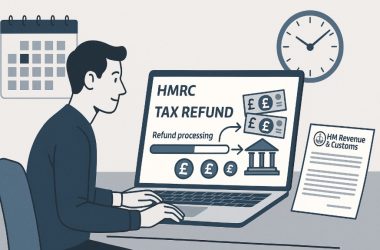
Use this simple checklist before you claim:
- Gather your records. Find your P60, P45, payslips, pension statements, P800 letter, Self Assessment calculation, expense receipts, mileage logs or bank interest details as relevant.
- Check your tax code. If it looks wrong, compare it with your current job, pension, benefits and estimated annual income. HMRC can update a code when it has the correct information. (gov.uk)
- Look for a P800 or Self Assessment repayment. PAYE taxpayers may receive a P800 after year end, while Self Assessment taxpayers should check their online account and tax calculation.
- Choose the correct claim route. For example, use the online P800 repayment service if your letter tells you to, complete your Self Assessment return if you are registered, or use P50 if you have stopped working and meet the conditions. (gov.uk)
- Submit accurate bank or contact details. Mistakes in names, addresses, account details or National Insurance numbers can slow the process.
- Keep evidence. For job expense claims, HMRC may need receipts, mileage logs or proof that you had to incur the cost for work. (gov.uk)
- Track the claim. If you claim online after a P800, HMRC provides expected timescales; Self Assessment repayments may show as pending while they are checked. (gov.uk)
Watch out for refund mistakes and scams
A genuine hmrc tax refund should be checked through official HMRC services, your personal tax account, the HMRC app, or correspondence you can verify. Be careful with emails, texts or calls that pressure you to click a link, pay a fee, or share bank details urgently. HMRC guidance explains that P800 refunds can be claimed through HMRC’s online services or paid by cheque, so you should not need to rely on an unexpected third-party message to access money you are owed. (gov.uk)
Also remember that not every overpayment produces an immediate cash payment. HMRC may change your tax code so you pay less tax through wages or pension, adjust your Self Assessment position, offset a repayment against another tax liability, or ask for more information before releasing money. That is normal, but it is still worth checking if a calculation looks wrong.
Key takeaway
Match your situation to the right HMRC process, check records, and claim using accurate evidence. A UK tax refund can arise from PAYE overpayments, Self Assessment, work expenses, stopping work, or leaving. Certain allowances may also qualify, so check promptly, correct tax code errors, and avoid unclaimed refunds.